
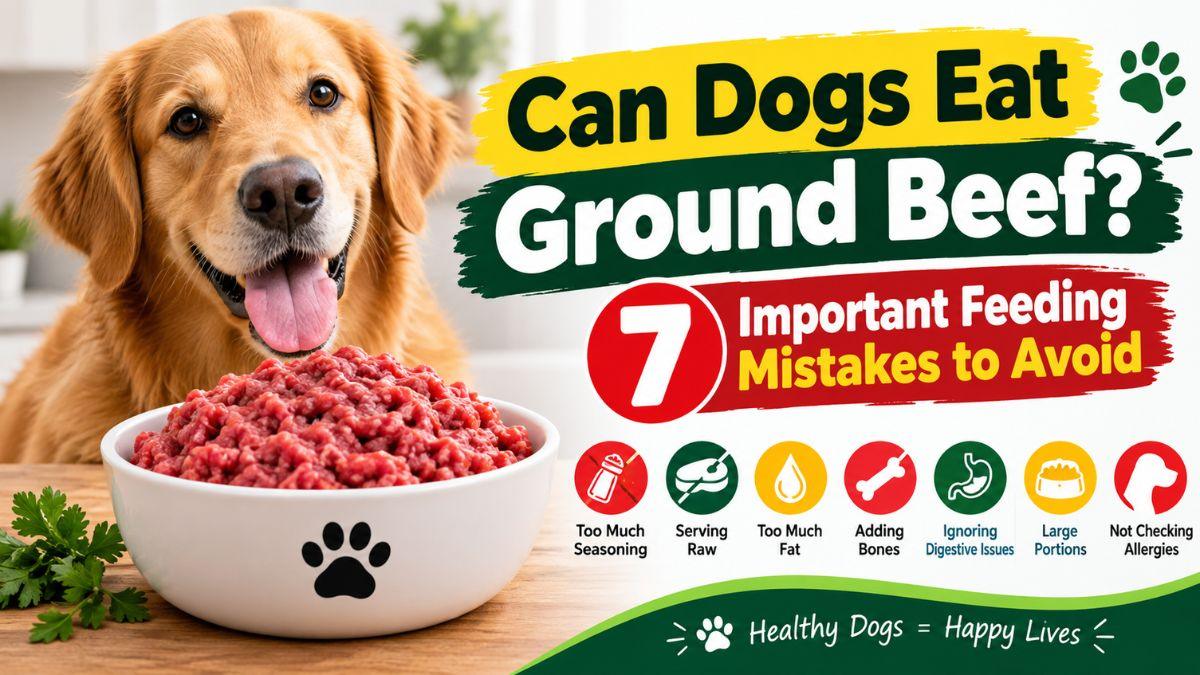
Can dogs eat ground beef? Yes — it’s one of the safest, most digestible proteins you can add to a dog’s diet when it’s prepared the right way. Ground beef is packed with protein, iron, zinc, and B vitamins that support muscle growth, a shiny coat, and steady energy. But how you feed ground beef to your dog matters just as much as whether you feed it at all the wrong fat ratio, an oversized portion, or a raw-feeding slip-up can lead to stomach upset, pancreatitis, or worse.
This guide covers everything a dog owner needs to know about feeding ground beef: raw versus cooked, how much to give based on your dog’s weight, which fat percentage is best, puppy-safe portions, allergy warning signs, and exactly what to do if your dog eats raw or spoiled ground beef by accident.
Is Ground Beef Good for Dogs? Nutritional Benefits Explained
Ground beef is a complete source of animal protein, meaning it contains all the essential amino acids dogs cannot produce on their own. A 100-gram serving of cooked, 90% lean ground beef provides roughly 26–28 grams of protein, along with:
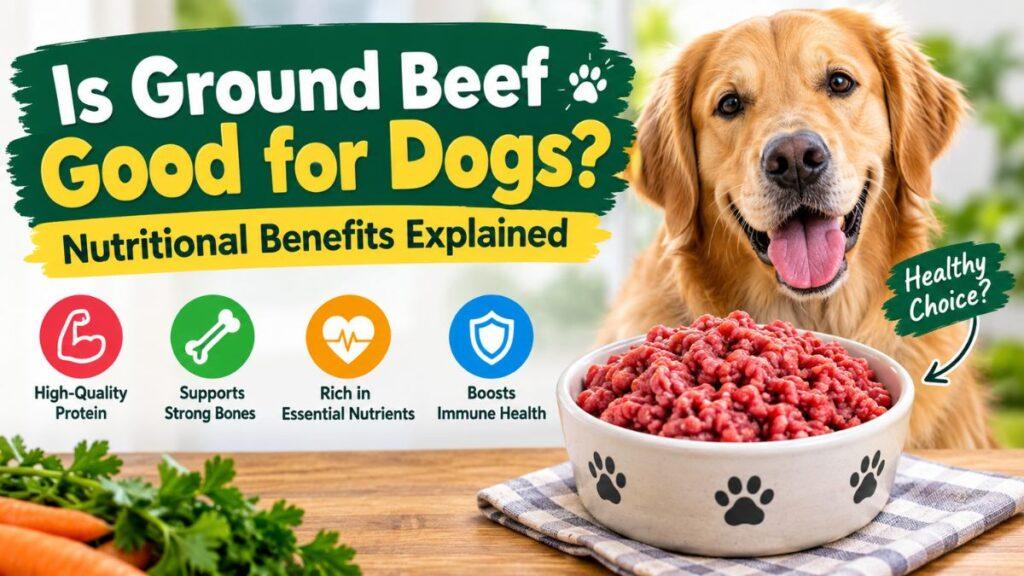
Iron – supports healthy red blood cells and oxygen transport
Zinc – aids skin repair and immune function
B vitamins (B6, B12, niacin) – support the nervous system and energy metabolism
Selenium – an antioxidant that also supports thyroid health
Essential fatty acids – contribute to skin and coat condition
Because it’s so palatable, ground beef is also useful for picky eaters, dogs recovering from illness, or seniors who’ve lost interest in their regular food. Its strong smell and rich flavor can encourage a dog to eat when appetite is low, which is one reason vets sometimes recommend it as a short-term food-motivation tool during recovery from surgery or illness.
That said, ground beef on its own is not a complete and balanced diet; it lacks calcium, fiber, and the full range of essential fatty acids a dog needs long-term. It should be used as a topper, treat, or short-term meal replacement, not a dog’s only food source, unless a veterinary nutritionist has formulated a complete homemade recipe around it.
Can Dogs Eat Raw Ground Beef?
Technically yes, but raw ground beef carries real, documented risk. Ground meat has far more surface area than a whole cut, so bacteria such as Salmonella, E. coli, and Listeria can spread throughout the meat during grinding rather than staying on the surface, where cooking would easily destroy them. A 2019 review published in the Journal of Small Animal Practice found that raw meat-based diets carry documented risks of bacterial contamination and antimicrobial-resistant bacteria for both dogs and the people handling their food.
If you still choose to feed raw ground beef, reduce the risk with these steps:
Buy from a trusted butcher or human-grade supplier, ideally grass-fed
Freeze it for several days before feeding to lower parasite risk
Feed immediately after thawing and refrigerate leftovers within 20 minutes
Use separate bowls, utensils, and prep surfaces from your own food
Avoid raw feeding entirely for puppies, senior dogs, pregnant dogs, or dogs with a weakened immune system
Can Dogs Eat Cooked Ground Beef?
Cooked ground beef is the safer, vet-recommended default for most households. Cooking to an internal temperature of at least 160°F (71°C) kills the bacteria most commonly found in ground beef. To keep it dog-safe:
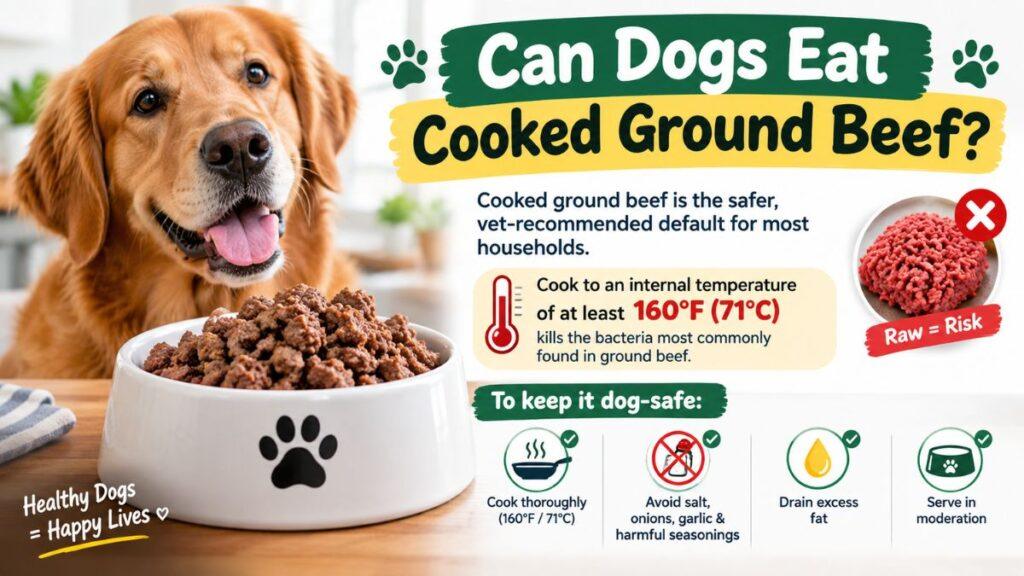
- Cook it plain — no salt, onion, garlic, or oil
- Brown it in a dry pan or boil it in water until no pink remains
- Drain off excess fat before serving
- Let it cool to room temperature before feeding
Never season ground beef the way you would for yourself. Onion and garlic even in powder form are toxic to dogs and can damage red blood cells, so double-check any pre-seasoned or marinated beef before it goes anywhere near your dog’s bowl.
Ground Beef Fat Content Guide: Which Ratio Is Best?
Ground beef is sold at different lean-to-fat ratios, and the right one depends on your dog’s health and activity level.
| Fat Ratio | Best For | Watch Out For |
| 93/7 or 96/4 (lean) | Overweight dogs, dogs prone to pancreatitis, bland-diet use | Can taste dry; pair with a healthy fat source elsewhere in the diet |
| 90/10 | Most healthy adult dogs | A good everyday balance of flavor and leanness |
| 85/15 | Active or working dogs, dogs needing extra calories | Drain the fat if your dog has a sensitive stomach |
| 80/20 | High-energy dogs, underweight dogs recovering from illness | Too rich for sedentary dogs; raises pancreatitis risk with regular feeding |
As a rule, the leaner the beef, the safer it is for daily feeding. Higher-fat blends should be reserved for dogs who genuinely need the extra calories, not used as a default.
How Much Ground Beef Can Dogs Eat? Portion Chart by Weight
Ground beef or any treat or topper should stay under 10% of your dog’s daily calories, with the rest coming from a complete and balanced dog food. As a general guide for cooked, lean ground beef:
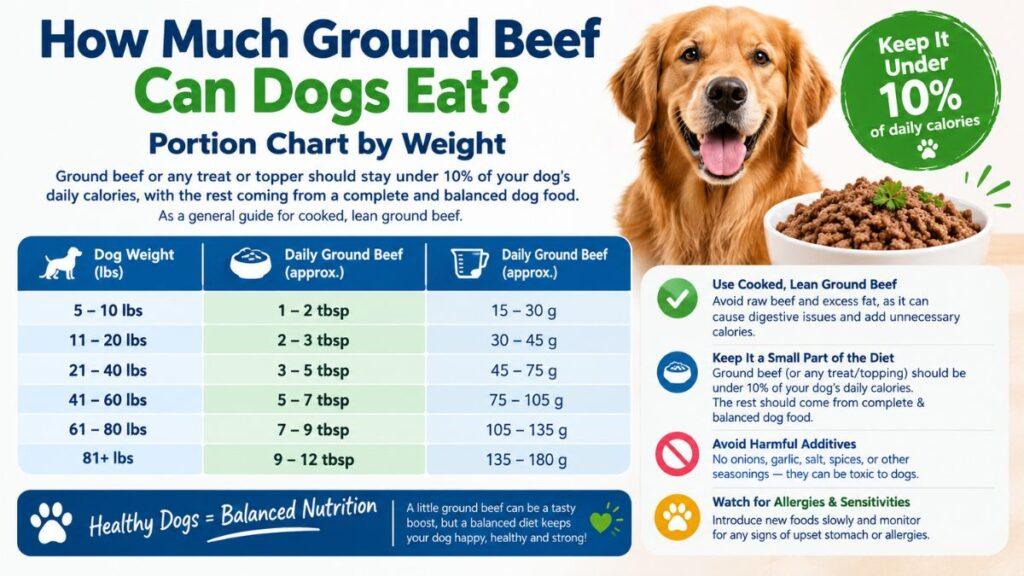
| Dog’s Weight | As a Topper | As a Temporary Full Meal |
| Under 20 lbs | 1–2 tablespoons | 1/3 cup |
| 20–50 lbs | 2–4 tablespoons | 1/2–1 cup |
| 50–90 lbs | 1/4–1/2 cup | 1–1.5 cups |
| 90+ lbs | 1/2–3/4 cup | 1.5–2 cups |
Split these amounts across two meals rather than feeding all at once, and adjust based on your dog’s body condition and activity level. Always check with your veterinarian before making ground beef a regular part of your dog’s diet, especially for dogs with kidney disease, pancreatitis, or a history of digestive issues.
Age, activity level, and current weight all shift these numbers. A working or highly active dog can tolerate the higher end of the range or a slightly fattier cut, while an overweight or sedentary dog should stay at the lower end with a lean blend. If you’re replacing a meal entirely rather than topping, reduce your dog’s regular kibble portion that day to avoid doubling up on calories.
How to Prepare Ground Beef for Your Dog: Step-by-Step
Choose lean meat — 90% lean or leaner for everyday feeding.
Skip the seasoning — plain water or a dry pan only, no oil, salt, or spices.
Cook thoroughly — no pink remaining, internal temperature of 160°F or higher.
Drain the fat — pour it off or blot with a paper towel.
Cool before serving — warm meat can burn a dog’s mouth.
Add fiber-rich sides — plain pumpkin, cooked white rice, or sweet potato help balance the meal.
Portion and store — refrigerate for up to 3 days or freeze in single-serving portions for later.
Can Puppies Eat Ground Beef?
Yes, puppies can eat ground beef once they’re weaned and eating solid food, usually from around 8 weeks old but only cooked, plain, and lean. Puppies have developing immune systems, so raw ground beef isn’t recommended until adulthood. Because puppies need higher calcium and a tightly balanced nutrient profile for bone growth, ground beef should only ever be a small addition to a complete puppy food, never a meal replacement, unless a veterinary nutritionist has designed the entire diet around it.
Ground Beef for an Upset Stomach: The Bland Diet Method
Cooked, lean (90–96%) ground beef is a classic bland-diet ingredient for dogs recovering from mild vomiting or diarrhea. Mix boiled, unseasoned ground beef with plain white rice in roughly a 1:2 ratio one part meat to two parts rice and feed small portions every few hours instead of your dog’s regular food. Most dogs can transition back to their normal diet within 2–3 days. If diarrhea, vomiting, or lethargy lasts longer than 24–48 hours, or your dog shows signs of pain, contact your veterinarian and a bland diet treats mild upset, not underlying illness.
Can Ground Beef Cause Allergies in Dogs?
Beef is actually one of the most common food allergens in dogs, right alongside dairy and chicken, largely because it’s such a frequent ingredient in commercial dog food. A true beef allergy is an immune response, not a digestive sensitivity, and cooking the meat does not remove the allergenic proteins. Watch for these signs after introducing ground beef:
Chronic itching or paw licking
Recurrent ear infections
Red, inflamed, or scabby skin
Vomiting or soft stool
Hives or facial swelling (seek emergency veterinary care immediately)
If you suspect a beef allergy, stop feeding it and talk to your vet about an elimination diet trial, the only reliable way to confirm a genuine food allergy versus a temporary sensitivity.
Grass-Fed vs Grain-Fed Ground Beef: Does It Matter?
Grass-fed ground beef tends to be leaner and contains roughly twice the omega-3 fatty acids of grain-fed beef, along with more antioxidants and beta-carotene. For dogs with skin sensitivities or joint issues, this can make a modest difference. That said, grain-fed ground beef is still a nutritious, safe option. The real-world benefit gap is smaller than the price gap, so choose based on your budget and your dog’s specific needs rather than assuming one is unsafe.
My Dog Ate Raw or Too Much Ground Beef — What Now?
If your dog gets into raw, spoiled, or an unusually large amount of ground beef, don’t panic; most dogs recover with simple monitoring. Here’s what to check based on the situation:
Plain, fresh ground beef, moderate amount: Watch for softer stool over the next 24 hours; this usually resolves on its own.
Raw or possibly spoiled beef: Monitor closely for vomiting, diarrhea, fever, or lethargy over the next 24–48 hours, which can signal bacterial illness.
A large, sudden amount (counter-surfing): Watch for signs of pancreatitis vomiting, abdominal pain, a hunched posture, or refusal to eat especially if the beef was fatty.
Beef with onion, garlic, or heavy seasoning: Contact your vet or an animal poison control line right away, since these ingredients are toxic even in small amounts.
Keep an eye on your dog’s appetite, energy level, and bathroom habits for the next two days, and don’t hesitate to call your vet if anything seems off it’s always better to check early than wait it out.
7 Common Mistakes to Avoid When Feeding Ground Beef to Dogs
Seasoning it like human food — onion, garlic, and salt are toxic or harmful in dog-sized amounts.
Feeding high-fat blends daily — repeated exposure to 70/30 or 80/20 beef raises pancreatitis risk over time.
Skipping the “10% rule” — treats and toppers, including ground beef, shouldn’t exceed 10% of daily calories.
Feeding raw beef to puppies or immunocompromised dogs — their systems handle bacterial exposure far less safely than a healthy adult.
Using ground beef as a sole, long-term diet — it lacks the calcium and fiber a dog needs for lasting health.
Ignoring allergy symptoms — chronic itching or ear infections are often blamed on environment when beef is the real trigger.
Reaching for corned beef or beef jerky as a substitute — both are loaded with sodium and preservatives that aren’t dog-safe.
Frequently Asked Questions
Can Dogs Eat Ground Beef Every Day?
Yes, in moderation, as long as it’s cooked, lean, unseasoned, and stays within 10% of daily calories alongside a complete dog food.
Is 80/20 Ground Beef Bad for Dogs?
It’s not inherently bad, but it’s high in fat and best reserved for active or underweight dogs rather than daily feeding.
Can Dogs Eat Ground Beef and Rice?
Yes it’s one of the most common bland-diet combinations for dogs with an upset stomach, typically mixed one part beef to two parts rice.
How Do I Know If My Dog Is Allergic to Ground Beef?
Watch for chronic itching, ear infections, or digestive upset that develops after repeated feeding, and confirm it with your vet through an elimination diet trial.
Can Dogs Eat Raw Ground Beef From the Grocery Store?
It’s riskier than butcher-sourced or commercially prepared raw diets, since standard grocery store ground beef isn’t handled to raw-feeding safety standards. Cooking it is the safer choice for most households.
The Bottom Line
So, can dogs eat ground beef? Absolutely it’s protein-rich, palatable, and useful for everything from daily toppers to bland-diet recovery meals. The key is preparation: keep it plain, choose a lean cut for regular feeding, portion it based on your dog’s weight, and lean toward cooked over raw unless you’re following a properly balanced raw-feeding plan. When in doubt about portions, allergies, or an accidental large helping, your veterinarian is always the safest source of guidance.
Sources referenced:
Davies, R., Lawes, J., & Wales, A. “Raw Diets for Dogs and Cats: A Review, with Particular Reference to Microbiological Hazards.” Journal of Small Animal Practice, 2019.