

Can dogs have mandarin oranges? Yes, dogs can eat mandarin oranges in small amounts. The fruit itself is not toxic, but the peel, seeds, and natural sugar all carry real risks that most owners do not know about. Before you hand your dog a segment, it helps to understand exactly how much is safe, what parts to avoid, and what to do if your dog eats more than it should.
Mandarin oranges are easy to peel and sweet, which makes them a tempting treat for a dog sitting at your feet during snack time. This guide covers the full picture: benefits, risks, safe portions by weight, guidance for puppies and dogs with health conditions, and clear steps to follow if your dog eats too much.
Can Dogs Have Mandarin Oranges? The Short Answer
Yes, healthy dogs can eat mandarin oranges as an occasional treat. Mandarin flesh is not poisonous to dogs, and small amounts of the fruit are unlikely to cause harm. That said, mandarin oranges are not a required part of a dog’s diet, and they should never replace a balanced dog food.

You may notice that some pet sites give stricter advice and say pets should avoid citrus fruit altogether. This is not wrong, it is just a different way of framing the same risk. The next section explains why that gap exists so you are not left confused by conflicting answers online.
Why Some Sources Say to Avoid Citrus Entirely
If you search for this topic, you will find some sites that say dogs should never eat citrus fruit, while most say a few pieces of mandarin are fine. Both answers come from the same set of facts, they just weigh the risk differently.
The stricter advice usually applies to whole, unpeeled fruit that a dog finds on the ground, such as a fallen mandarin or orange still covered in peel. In that form, the fruit brings peel oils, pith, and seeds along with it, which raises the real risk of stomach upset or a blockage. The more common advice, which allows small amounts, is talking about peeled, seedless mandarin flesh given on purpose in a controlled portion.
So the real answer is not yes or no. It depends on how the fruit is prepared. A few pieces of peeled, seedless mandarin flesh are a low risk treat. A whole fallen mandarin with peel and seeds still attached is a much bigger concern, especially for small dogs.
Nutritional Benefits of Mandarin Oranges for Dogs
Mandarin oranges are not necessary for a dog’s health, since a complete dog food already supplies everything a healthy dog needs. That said, mandarin flesh does offer a few useful nutrients when given in small amounts.
Vitamin C is one of the main nutrients in mandarin oranges. It works as an antioxidant and may help support the immune system, although dogs already make their own vitamin C in the liver, so this is a bonus rather than a requirement.
Fiber is another benefit. A small amount of fiber from mandarin flesh can support digestion and help form firmer stools. Too much fiber at once, however, can have the opposite effect and cause loose stool.
Potassium in mandarin oranges supports muscle function and nerve signaling. Antioxidants and flavonoids in the fruit may help reduce oxidative stress in the body. Mandarin oranges are also mostly water, so a segment or two can offer a small hydration boost on a hot day.
None of these benefits are unique to mandarin oranges. A dog that eats a complete, balanced diet is already getting these nutrients through its regular food.
Mandarin vs Orange vs Clementine vs Tangerine for Dogs
Owners often ask if mandarin oranges are different from regular oranges, clementines, or tangerines when it comes to dog safety. The short answer is that they are all part of the same citrus family, and the safety guidance is nearly identical across all of them.
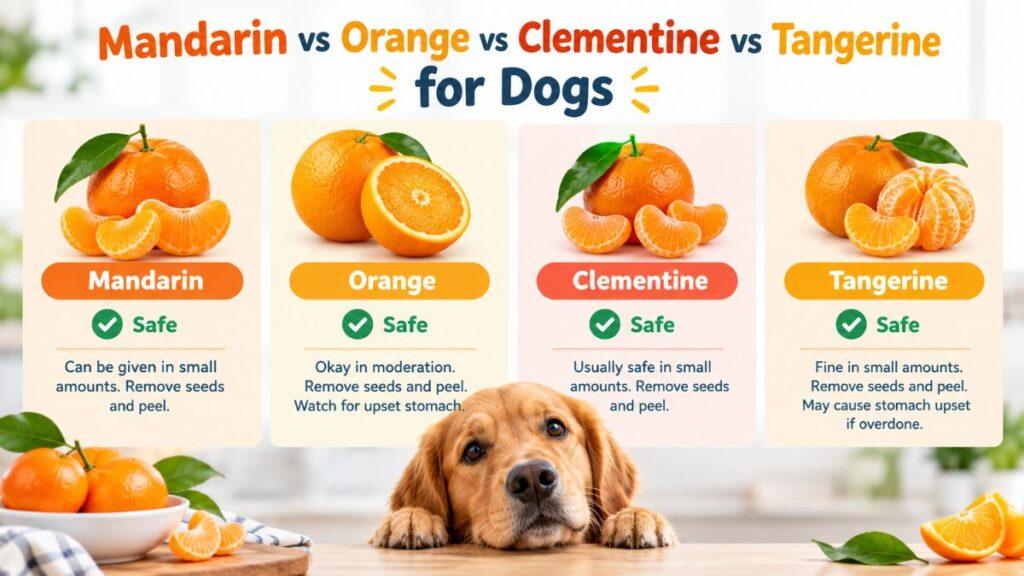
| Fruit | Safe for dogs | Key notes |
| Mandarin orange | Yes, in small amounts | Smaller, sweeter, and easier to peel than regular oranges |
| Regular orange | Yes, in small amounts | Slightly more acidic, still needs peel and seeds removed |
| Clementine | Yes, in small amounts | A type of mandarin, usually seedless, easy for smaller dogs |
| Tangerine | Yes, in small amounts | Similar sugar content to mandarins, same peel and seed rules apply |
| Satsuma | Yes, in small amounts | Another mandarin type, low acidity, usually seedless |
The main differences between these fruits are size, sweetness, and how easy they are to peel. None of them are more toxic than the others. The same rules apply across the board: remove the peel, remove the seeds, and keep the portion small.
Potential Risks of Feeding Mandarin Oranges to Dogs
Mandarin oranges are not dangerous in small amounts, but there are three areas of real risk that every owner should understand.
Natural Sugar Content
Mandarin oranges are sweet because of their natural sugar. A medium mandarin has roughly 8 to 10 grams of sugar. For a small dog, that is a meaningful amount of sugar in one sitting. Too much sugar, even from fruit, can contribute to weight gain over time and can be a problem for dogs that are overweight, prediabetic, or diabetic. Dogs prone to pancreatitis should also avoid sugary fruit unless a vet says otherwise.
Acidity
Citrus fruit is acidic, and mandarin oranges are no exception, although they are less acidic than lemons or limes. This acidity can irritate the stomach lining in sensitive dogs, leading to mild vomiting or diarrhea. If your dog has a sensitive stomach or has never had citrus before, start with a very small piece and watch for any reaction over the next few hours.
Peel, Pith, and Seeds
This is the part most articles get wrong or skip entirely. The peel and white pith of a mandarin orange contain natural compounds called essential oils, including d-limonene and linalool, along with plant compounds called psoralens. These substances are what give citrus peel its strong smell, and they are also what irritate a dog’s digestive tract and skin if eaten or handled in large amounts. In high enough amounts, these compounds have also been linked to photosensitivity in some animals, meaning skin that reacts more easily to sunlight.
Mandarin seeds are not the same kind of danger as apple or cherry seeds, which contain cyanide producing compounds. Mandarin and other citrus seeds do not carry that specific risk. The real concern with seeds is physical: they are hard, they can be a choking hazard, especially for small dogs, and swallowing several at once can cause mild digestive irritation. The peel itself is also tough and fibrous, which makes it hard to digest and raises the risk of a blockage if a dog eats a large piece.
The safest approach is simple: only feed the peeled, seedless flesh, and never the peel, pith, or seeds.
How Much Mandarin Can a Dog Eat
Portion size should always match your dog’s size. Treats, including fruit, should never make up more than 10 percent of a dog’s daily food intake.
| Dog size | Safe portion |
| Extra small (under 10 lbs) | 1 small segment, occasionally |
| Small (10 to 25 lbs) | 1 to 2 segments |
| Medium (25 to 50 lbs) | 2 to 3 segments |
| Large (50 lbs and up) | 3 to 4 segments |
A single mandarin segment has roughly 1 to 2 grams of sugar, so even a few segments add up quickly for a small dog. This matters most for owners managing a diabetic or overweight dog, since sugar grams are a better guide than calories alone when deciding how much fruit is safe.
Mandarin oranges should be an occasional treat, not a daily habit. One or two segments a few times a week is a reasonable upper limit for most healthy dogs.
Special Considerations: Puppies, Senior Dogs, Diabetic Dogs, and Overweight Dogs
Different dogs handle mandarin oranges differently, and it helps to know where the extra caution should go.
Puppies have smaller, more sensitive digestive systems. A tiny piece of mandarin flesh is unlikely to cause harm, but puppies are more likely to get an upset stomach from new foods, including fruit. Introduce it slowly and watch closely for loose stool.

Senior dogs can usually handle a small piece of mandarin if they tolerate citrus well, and the vitamin C and hydration may offer a small benefit. Older dogs with sensitive stomachs or existing digestive issues may react more strongly to the acidity, so keep the portion small.
Diabetic dogs should only get mandarin oranges with a vet’s approval, and only in very small amounts if at all. The natural sugar can affect blood sugar control, so this is one group where it is worth checking with your vet before offering any.
Overweight dogs should treat mandarin oranges as an occasional exception rather than a regular snack. The natural sugar adds calories that can work against a weight management plan. Lower sugar treats are usually a better everyday choice for these dogs.
Dogs with a history of kidney stones or urinary issues should also get a smaller amount, since some citrus fruits contain oxalates that may be worth avoiding in large quantities if your dog has that specific history. If you are unsure, ask your vet before feeding citrus fruit regularly.
Can Dogs Eat Canned Mandarin Oranges or Mandarin Juice
No, canned mandarin oranges and mandarin juice are not a good choice for dogs. Canned mandarins are usually packed in syrup or juice with added sugar, which raises the sugar content far above what fresh fruit contains. Some canned products also include preservatives that offer no benefit to a dog and may upset a sensitive stomach.
Mandarin juice, whether store bought or fresh squeezed, concentrates the sugar and acid from several pieces of fruit into one serving, without any of the fiber that comes from eating the whole segment. This makes juice a much bigger sugar load than a single piece of fresh fruit. Water is always the better choice for keeping a dog hydrated.
If you want to share mandarin with your dog, stick to fresh, peeled, seedless segments only.
What to Do If Your Dog Eats Too Much Mandarin, Peel, or Seeds
If your dog eats a normal small treat portion of peeled mandarin flesh, you likely have nothing to worry about. But accidents happen, and dogs sometimes get into a whole mandarin, peel and all. Here is how to tell the difference between a mild reaction and something that needs faster attention.
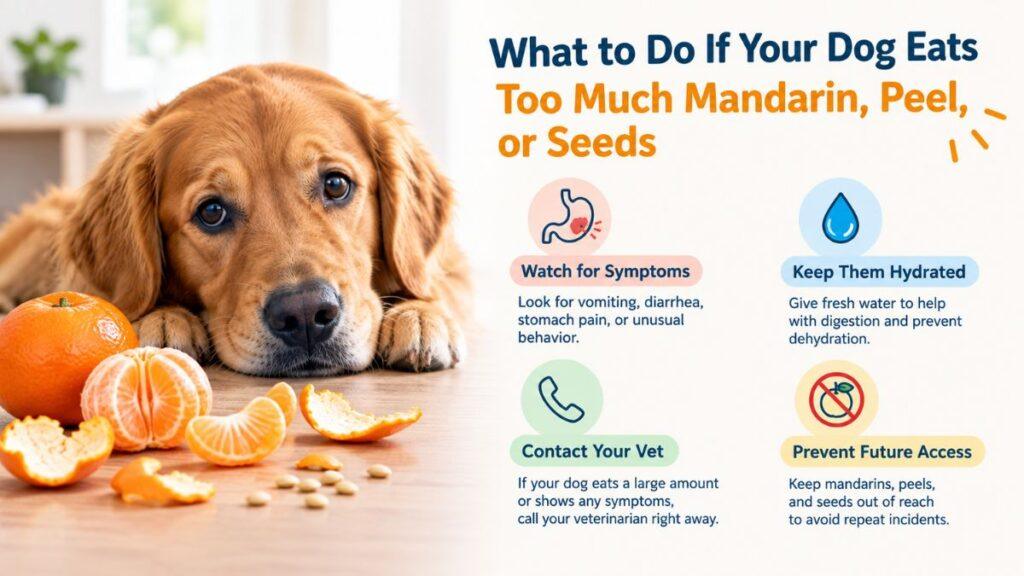
Mild symptoms to monitor at home include a single episode of soft stool, mild gas, or a bit of stomach gurgling. These usually pass on their own within a day. Make sure fresh water is available and skip other treats until your dog’s stomach settles.
Signs that need same day veterinary attention include repeated vomiting, diarrhea that does not stop, visible lethargy, refusing food for more than a day, straining without producing stool, or any sign of choking right after eating peel or seeds. These signs can point to a digestive blockage from swallowed peel, which is more likely in small dogs that have eaten a large piece.
If you are ever unsure how much your dog ate or how they are reacting, it is always safer to call your vet or an animal poison control line and describe exactly what happened. Trying to guess at home is riskier than a quick phone call.
Healthier Fruit Alternatives to Mandarin Oranges
If you want a lower sugar option or your dog has a condition that makes citrus a poor fit, several other fruits make good occasional treats. Blueberries are low in sugar and easy for most dogs to eat whole. Watermelon, with seeds and rind removed, offers hydration with less acidity. Apple slices without seeds are a crunchy, fiber rich option. Cucumber slices are very low in calories and a good choice for dogs watching their weight.
As with mandarin oranges, all of these should be given in small amounts as an occasional treat, not a daily addition to your dog’s diet.
Frequently Asked Questions
Can dogs eat mandarin orange peel?
No. The peel is tough to digest and contains essential oils and plant compounds that can irritate a dog’s stomach. It also raises the risk of a digestive blockage in small dogs.
Can dogs eat mandarin seeds?
Mandarin seeds are not toxic the way apple or cherry seeds are, but they are a choking hazard and can cause mild stomach irritation if swallowed. Always remove seeds before feeding.
How many mandarin segments can a dog eat in a day?
This depends on size. Small dogs should stick to one or two segments, while larger dogs can handle three or four occasionally. Treats should never exceed 10 percent of daily food intake.
Can puppies eat mandarin oranges?
Yes, in very small amounts. Puppies have sensitive stomachs, so introduce a tiny piece slowly and watch for loose stool before offering more.
Can diabetic dogs eat mandarin oranges?
Only with a vet’s approval. The natural sugar in mandarin oranges can affect blood sugar control, so this is a case where checking with your vet first is the safest step.
Are mandarin oranges better for dogs than regular oranges?
Not really. Mandarin oranges are slightly sweeter and easier to peel, but the safety guidance is the same for both. Neither is more or less toxic than the other.
What happens if a dog eats a whole mandarin with the peel?
Mild cases cause an upset stomach with soft stool or vomiting. In more serious cases, especially in small dogs, swallowed peel can contribute to a digestive blockage, which needs veterinary attention.
Can dogs eat canned mandarin oranges?
No. Canned mandarins are packed in sugary syrup or juice, which is far more sugar than a dog needs. Stick to fresh, peeled, seedless mandarin segments instead.
Final Thoughts
Can dogs have mandarin oranges? Yes, in small, prepared amounts. Mandarin flesh offers vitamin C, fiber, and a bit of hydration, but the peel, seeds, and natural sugar all carry real risks that are worth taking seriously. Stick to a few peeled, seedless segments as an occasional treat, watch your dog’s reaction the first time, and check with your vet before offering any if your dog is diabetic, overweight, or prone to digestive issues. When prepared correctly, mandarin oranges can be a safe, occasional snack for most healthy dogs.