
No. Dogs should not be given rib bones, cooked or raw, as a chew or a treat. Rib bones splinter, and the fragments cause choking, broken teeth, mouth injuries, and blockages or tears in the digestive tract. Veterinary and federal health sources advise against feeding bones of any kind, and beef, pork, and lamb ribs all carry the same core risks.
Can dogs have rib bones safely?
There is no version of a rib bone that veterinarians treat as a safe everyday chew. Not cooked, not raw, not meaty, not picked clean. PetMD’s veterinary-reviewed guidance on bones, reviewed by Jo Cornett, DVM, states plainly that dogs should not have rib bones of any type, whether pork, beef, or another animal, because they are prone to splintering and can cause choking, broken teeth, internal injuries, or blockages. That verdict does not depend on which animal the rib came from.
A few things move the risk up or down without ever making a rib bone safe. Cooking dries the bone out and makes it more brittle. Size matters, because a fragment a large dog would pass without noticing can choke a small one. Chewing style matters too, since a dog that crunches and swallows fast is in more danger than one that gnaws slowly. And the meat is a separate question from the bone, with its own set of problems.
None of those factors add up to a safe combination, which is why most veterinary hospitals recommend skipping rib bones entirely in favor of a purpose-made chew.
Why rib bones are dangerous for dogs
Bones are hard and brittle, and a dog’s large chewing teeth can break on them. VCA Animal Hospitals, summarizing guidance from the U.S. Food and Drug Administration, sets out several distinct ways this goes wrong. Broken edges of bone can be razor sharp and pierce the tongue, cheek, or soft palate. Pieces can lodge in the esophagus or get into the windpipe. Sharp fragments can damage the walls of the stomach and intestines and, in some cases, penetrate them completely, letting intestinal contents leak into the abdomen and causing peritonitis, an infection that can be fatal even when treated aggressively.
Fragments that travel further down cause a different set of problems. A piece lodged in the small intestine can cause a complete blockage requiring surgery, and fragments that reach the colon can collect there and cause painful constipation, scraping the lining on the way through and sometimes needing enemas or manual clearing.
Bone is also one of the foreign bodies veterinarians see most often. Cornell University’s Riney Canine Health Center lists bones alongside toys, socks, rocks, and corn cobs as common causes of gastrointestinal obstruction, and notes that most such obstructions require surgery.
Are cooked rib bones more dangerous than raw ones?
Cooked rib bones splinter more readily, but raw ones are not a safe alternative. PetMD notes that cooked bones splinter more easily than raw ones, which raises the risk of choking and of shards piercing the digestive tract. That applies to any cooking method, grilled, roasted, smoked, or boiled, and to leftovers from a family meal as much as to bones sold as treats.
Raw ribs trade one risk for another. They still fracture teeth, still choke, and still obstruct, and they add a contamination problem on top. The American Veterinary Medical Association’s policy on raw diets for dogs and cats discourages feeding any raw or undercooked animal-sourced protein because of the risk to both animal and human health, citing pathogens including Salmonella, Campylobacter, E. coli, and Listeria monocytogenes. The policy also notes that apparently healthy dogs can carry these organisms without showing signs and still pose a risk to people in the household, particularly children, older adults, and anyone immunocompromised.
| Factor | Cooked rib bone | Raw rib bone |
| Splintering | Higher risk | Lower, but still present |
| Bacterial contamination | Lower, since cooking reduces pathogens | Higher (Salmonella, Campylobacter, E. coli, Listeria) |
| Broken teeth | Present | Present |
| Choking and obstruction | Present | Present |
Neither column describes a chew that mainstream veterinary sources endorse.
What to do if your dog has already eaten a rib bone
Take away whatever bone is left, note what kind it was and roughly how much your dog swallowed, note the time, and call your veterinarian or the nearest emergency clinic. Do not try home remedies while you wait.
- Remove any remaining bone or fragments so your dog cannot eat more.
- Note whether it was cooked or raw, which animal it came from, and how much is missing.
- Note when it happened, because timing changes what your vet can offer.
- Call your regular vet or an emergency clinic and describe the situation.
- Do not induce vomiting, give laxatives, or feed bread unless a veterinarian tells you to. Bringing a sharp fragment back up can cause fresh injury on the way.
- Keep watching over the following days, even if you are told to monitor at home rather than come in.
Timing is worth understanding. Making a dog vomit is only an option in a narrow window. PetMD’s veterinary-authored guidance on intestinal blockage notes that this is generally done no more than 30 minutes to two hours after the object was eaten, and that once a dog is already showing signs of a blockage it is usually too late for that approach. This is a decision for a veterinarian rather than something to attempt at home, but it explains why calling promptly matters more than waiting to see what develops.
Symptoms to watch for after a dog eats a rib bone
Outcomes vary widely. Some dogs pass small, well-chewed pieces with no trouble at all. Others get into difficulty within hours, and some show nothing until a fragment has already caused damage further down. Cornell’s Riney Canine Health Center explains that the signs of a foreign body obstruction depend on how severe the blockage is, where it sits in the gastrointestinal tract, and how long it has been there. That is why there is no single window to watch and then relax.
Signs that warrant a call:
- Gagging, coughing, retching, or difficulty swallowing
- Repeated vomiting
- Heavy drooling
- Straining to defecate, or passing very little
- Abdominal pain, a hunched posture, or reluctance to be touched near the belly
- Lethargy or loss of appetite
- Blood in vomit or stool
One pattern is especially telling. PetMD states that a dog vomiting but not producing any stool is showing a strong indication of a blockage and should be seen immediately. Do not use the reverse as reassurance, though. The same source notes that many dogs with a blockage do still pass stool, often as diarrhea or in a very thin shape. Normal-looking bowel movements rule nothing out.
When to call a veterinarian, and what happens at the clinic
Go straight to an emergency clinic if your dog is choking, struggling to breathe, vomiting repeatedly, unable to pass stool, bleeding, collapsing, or obviously in pain. Call the same day even without dramatic symptoms if a large piece of cooked bone went down whole, if your dog is a puppy or a small breed, if there is a history of digestive problems, or if you cannot account for how much bone is missing.
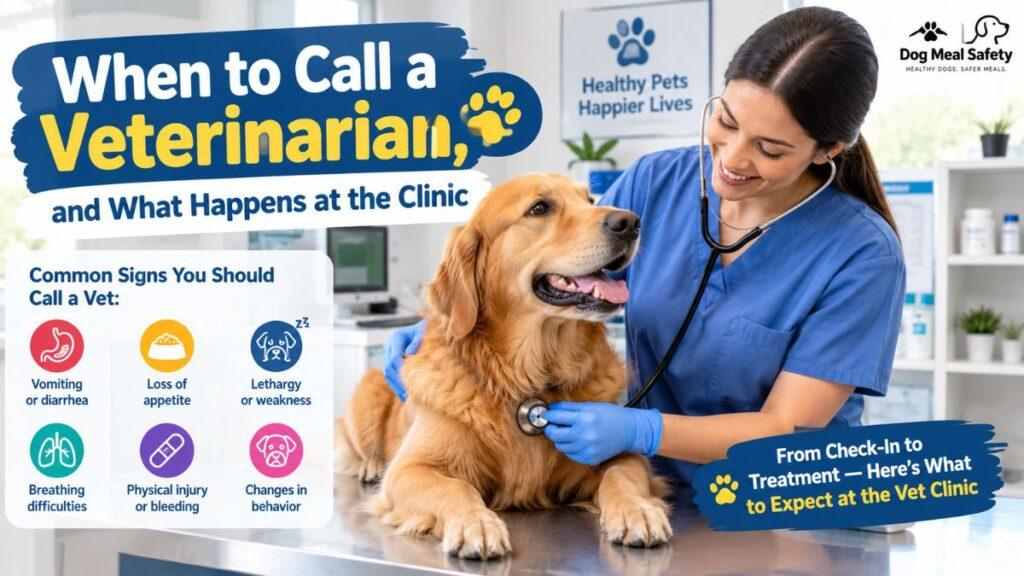
At the clinic, VCA Animal Hospitals describes a fairly consistent process. The veterinarian takes a full history and performs a physical examination, then uses abdominal X-rays if a foreign body is suspected, sometimes several views or a contrast study using barium. Blood and urine tests may follow, both to assess how the obstruction has affected the dog and to rule out other causes of vomiting. If an obstruction is diagnosed or suspected, exploratory surgery is generally recommended, and time matters, because a blocked stomach or intestine can lose its blood supply within hours and the tissue can die. If the object looks likely to pass on its own, the dog may instead be hospitalized for observation on intravenous fluids, with follow-up X-rays to track its progress.
Endoscopy is sometimes an option for fragments still sitting in the stomach. VCA notes that bone fragments trapped in the stomach have to be removed either by abdominal surgery or by endoscopy, and Cornell describes endoscopic retrieval under anesthesia, using a camera and a snare wire, as a possibility for objects still in the stomach.
Do beef, pork, and lamb rib bones carry different risks?
No rib bone is safe by comparison with another. Whether the bone was cooked or raw matters more than which animal it came from, and the individual dog matters as much as either. A determined chewer can turn any rib into sharp fragments.
Pork is the one type with a specific published warning attached. PetMD states that dogs should not have pork rib bones, that cooked pork bones splinter easily and become a choking hazard, and that raw pork bones carry a bacterial contamination risk such as salmonella. Beef and lamb ribs fall under the same general guidance rather than under anything that singles them out as better or worse. The FDA’s long-standing position is that bones are unsafe regardless of their size, which undercuts the common assumption that a big beef rib is a safer bet than a small one.
Lamb ribs deserve one extra thought, but it has nothing to do with the bone. They are often served in rich, heavily seasoned sauces, which brings in the ingredient risks covered below.
What about store-bought rib bone treats?
Packaged bone treats are not a safer substitute for kitchen leftovers. In its consumer update on bone treats, the FDA reported roughly 68 accounts of pet illness linked to processed bone treats, received between November 2010 and September 2017 and involving about 90 dogs, approximately 15 of which died. Products described as “Rib Bones” were named among the treats listed in those reports, alongside ham bones, pork femur bones, and smokey knuckle bones. Reported problems included gastrointestinal obstruction, choking, cuts to the mouth or tonsils, vomiting, diarrhea, and rectal bleeding. The agency also received a small number of complaints about the products themselves, including bones that appeared moldy and bones that splintered while the dog was chewing.
These treats differ from uncooked butcher bones in that they are dried by smoking or baking and may contain preservatives, seasonings, and smoke flavourings. The drying is the problem, because it makes an already brittle material more brittle still. A bone sold in a pet aisle has cleared no safety threshold that a leftover rib has not.
Can dogs eat rib meat without the bone?
Plain, unseasoned rib meat in a small amount is lower risk than the bone, but leftover ribs are rarely plain. Once the bone is out of the picture, the seasoning is usually the bigger problem.
Barbecue sauces, rubs, and marinades routinely contain onion and garlic. The Merck Veterinary Manual explains that Allium species, including onions and garlic, cause Heinz body hemolytic anemia in dogs, that garlic is three to five times more toxic than onion, and that dogs have been affected by cooked, dehydrated, and granulated forms rather than only raw ones. Signs of acute hemolytic anemia, including weakness, pale gums, jaundice, and collapse, develop several days after the meal rather than immediately. That delay is the dangerous part, because a dog can seem completely fine the evening a plate of ribs disappears.
Portion size matters as well. A scrap of plain meat is a different proposition from a plateful of leftovers, and rich, fatty table food is a common cause of digestive upset. If the meat came off a bone your dog was already working on, check that no small fragments are mixed in with it before you hand it over.
Are rib bones riskier for puppies, small dogs, and heavy chewers?
Yes, though the answer for every other dog is still no. Puppies chew indiscriminately while they are teething, and their smaller digestive tract narrows the margin for a fragment that gets stuck. Small breeds have a proportionally smaller airway and esophagus, so a piece a Labrador would swallow without incident can choke them. Powerful chewers break bones down into large, sharp pieces quickly and are more likely to swallow them whole than to work them small.
Dogs that have had digestive surgery before also have more to lose. PetMD notes that once there is scar tissue from a previous obstruction, complications are more likely the next time around.
Safer alternatives to rib bones
Purpose-made chews sized to your dog, ideally ones carrying the Veterinary Oral Health Council seal, give a dog the satisfaction of chewing without the fracture and splinter risk of real bone.
The most useful practical test comes from Dr. Brian Collins, head of the Community Service Practice at Cornell University’s Hospital for Animals. Responding to the FDA’s bone treat warning, he discouraged bones, antlers, hooves, and other hard or abrasive objects entirely, and offered a simple standard for a suitable chew: it should be “bendable and be able to be indented with a fingernail.” He also recommends supervising dogs with toys, since it is difficult to predict how an individual dog will handle any given object. That fingernail test takes two seconds in a shop aisle and rules out most of what sits on the hard-chew shelf.
The VOHC’s accepted products list is the other useful reference, and it is worth understanding what the seal actually certifies. Products are accepted against a specific claim, plaque control, tartar control, or both, on the basis of trial data submitted to the council. It is a claim-verification program rather than a general safety rating, so the seal tells you a product does what it says about plaque or tartar, not that it is risk-free for every dog. The dog list covers dental diets, rawhide chews, edible chew treats, water additives, gels and toothpastes, toothbrushes and wipes, and a professional sealant, and the council publishes downloadable product tables that it updates through the year.
A few sensible habits alongside that:
- Match the chew to your dog’s weight and jaw strength. Anything small enough to swallow whole is a choking risk whatever it is made of.
- Watch your dog closely with anything new, and take it away once it is worn down far enough to swallow.
- Ask your own veterinarian for a specific recommendation if your dog is a puppy, a heavy chewer, or has had dental or digestive trouble before.
Prevention does more than product choice, though. Keep plates out of reach while you cook and eat, and take the bin out rather than leaving a carcass where a determined dog can find it.
Conclusion
Rib bones are an easy thing to hand over, whether they are left on a plate after dinner or sold shrink-wrapped in a pet aisle. Neither version holds up as a safe chew. The shape and brittleness of a rib make it likely to break into fragments sharp enough to injure a dog’s mouth, throat, or gut. Raw versions add a contamination risk for the whole household, and the processed treat versions carry their own record of reported harm.
If your dog does get hold of one, the useful response is to take away what is left, work out what and how much went down, and call a vet rather than waiting to see what happens. For everyday chewing, a properly sized chew that bends and dents under a fingernail gives a dog the same satisfaction at a fraction of the risk. Keeping plates out of reach and bins emptied prevents more trouble than any rule about which type of rib is supposedly the better one.
Frequently asked questions
Can dogs eat cooked rib bones?
No. Cooking makes rib bones more brittle and more likely to break into sharp pieces, raising the risk of choking, mouth injuries, and a blockage or tear in the digestive tract. This applies to beef, pork, and lamb ribs alike, and to a bone from a family meal just as much as one from a treat packet.
What should I do if my dog swallowed a rib bone?
Remove any remaining bone, note the type and how much was eaten, and call your veterinarian or an emergency clinic. Do not induce vomiting or try home remedies without professional direction, and keep watching for symptoms over the following days even if you are told to monitor at home.
Can a dog digest a rib bone?
Small, well-chewed pieces sometimes pass without incident, but digestion does not remove the mechanical risk. A fragment can scratch or perforate the digestive tract, or lodge somewhere along the way, well before it would break down.
Are raw rib bones safe for dogs?
Raw ribs splinter somewhat less than cooked ones, but they still fracture teeth and still cause blockages, and they add a contamination risk. The AVMA discourages raw animal-sourced protein because of pathogens including Salmonella and E. coli, which can make people in the household ill as well as the dog.
Can dogs eat pork rib bones?
No. PetMD advises against pork rib bones specifically: cooked ones splinter easily and pose a choking hazard, and raw ones add a bacterial contamination risk. There is no safety advantage to choosing pork over beef or lamb.
My dog is still passing stool normally. Does that rule out a blockage?
No. Many dogs with an intestinal blockage still pass stool, often as diarrhea or in a very thin shape. Vomiting with no stool at all is a strong warning sign, but normal-looking bowel movements are not proof that nothing is wrong.
How long after eating a rib bone can problems appear?
There is no fixed timeline. Signs depend on where a fragment ends up, how badly it is obstructing, and how long it has been there. Some dogs are in distress within hours and others take a day or more, which is why watching for several days beats counting down a specific window.