

Eucalyptus has a clean, spa-like scent that many people love but if you share your home with a dog, that same plant can turn into a serious health hazard. The short answer to “is eucalyptus safe for dogs” is no. Every part of the eucalyptus plant, along with its extracted oil, contains compounds that dogs cannot safely process.
This guide goes beyond the basics of “call your vet” advice. It covers exactly how eucalyptus poisoning happens, which everyday household products secretly contain it, what actually happens during vet treatment, how long recovery takes, and which dogs face the highest risk.
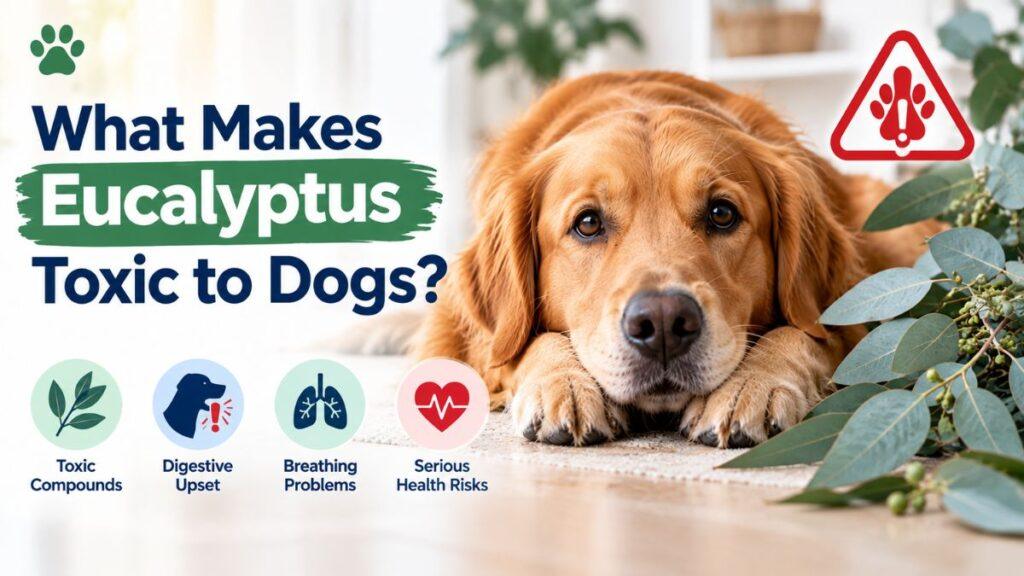
What Makes Eucalyptus Toxic to Dogs?
The danger comes from a compound called eucalyptol (also known as cineole), which makes up a large percentage of eucalyptus oil. In humans, the liver breaks eucalyptol down fairly efficiently. Dogs lack the same enzymatic pathways, so the compound lingers in their system longer and at higher concentrations, irritating the gastrointestinal tract and, in larger amounts, affecting the nervous system and liver.
This is why the ASPCA lists eucalyptus among the plants considered toxic to dogs, and why veterinarians consistently recommend keeping eucalyptus products out of homes with pets, or handling them with strict precautions.
How Dogs Actually Get Exposed
Most pet owners picture a dog chewing on a houseplant, but real-world exposure usually happens through everyday products:
Ingestion — chewing on plant leaves, licking spilled oil, or swallowing a broken diffuser bottle
Topical/skin contact — oil applied directly to fur or skin, or a dog rubbing against a treated surface
Inhalation — diffusers, reed diffusers, and heavily scented candles running in enclosed rooms
Hidden Sources of Eucalyptus in the Home
This is the part most articles skip because eucalyptol doesn’t just show up in obvious essential oil bottles. It’s a common ingredient in:
- Vapor rubs and chest-congestion ointments
- Menthol/eucalyptus cough drops and lozenges left within reach
- Mouthwashes and toothpastes
- Insect repellents and flea sprays
- Cleaning products, air fresheners, and scented garbage bags
- Decorative eucalyptus wreaths, dried arrangements, and garden mulch
Practical tip: Check ingredient labels for “eucalyptol,” “eucalyptus globulus,” or “cineole” before bringing a new cleaning or personal-care product into a home with dogs.
Symptoms: Mild vs. Serious
Mild signs (still call your vet — don’t wait)
Drooling or pawing at the mouth
A single episode of vomiting
Mild lethargy or reduced appetite
Serious signs (emergency vet immediately)
Repeated vomiting or diarrhea
Wobbly, uncoordinated movement
Labored or rapid breathing
Muscle tremors or seizures
Collapse or unresponsiveness
Symptoms can escalate from mild to severe within hours, which is why “wait and see” is never the safe choice.
How Much Eucalyptus Is Dangerous?
There’s no universally “safe” amount, because toxicity depends on concentration, the dog’s size, and individual sensitivity. As a general rule:
Undiluted essential oil is the highest-risk form; even a few licked drops can trigger symptoms in a small dog.
Fresh leaves or dried arrangements are lower concentration but can still cause stomach upset if chewed or swallowed in quantity.
Diffused vapor in a small, closed room builds up concentration over time, which is why ventilation matters even with “gentle” diffusers.
Because there’s no reliable at-home way to judge a “safe dose,” any known exposure regardless of amount warrants a call to a vet or animal poison control line.
What Happens at the Vet: The Actual Treatment Process
Most articles stop at “go to the vet.” Here’s what treatment typically involves, so you know what to expect:
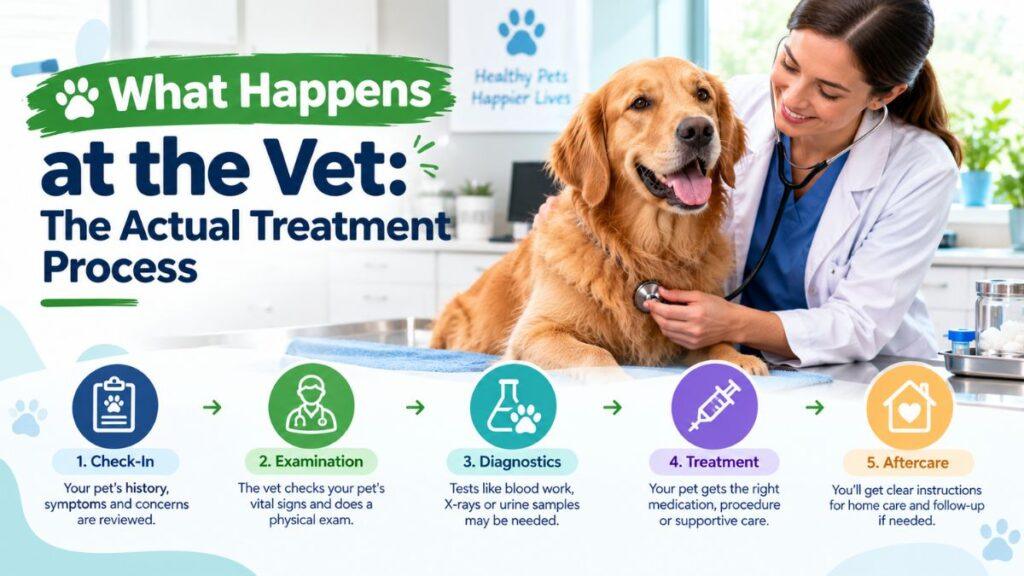
Decontamination — if exposure was recent and the dog isn’t already vomiting, the vet may induce vomiting or use activated charcoal to limit further absorption (never attempt this at home without guidance).
Skin/coat washing — if oil is on the fur, a vet may bathe the dog with a mild, dog-safe soap to stop ongoing absorption through grooming.
IV fluids — support hydration and help flush toxins through the kidneys.
Monitoring — heart rate, breathing, and neurological signs are tracked closely, since symptoms can worsen over several hours.
Liver function tests — bloodwork may be repeated over the following days, since liver stress from oil ingestion doesn’t always show up immediately.
Symptomatic care — anti-nausea medication, seizure control, or oxygen support depending on severity.
Recovery Timeline
Mild exposure: Dogs often recover within 24–48 hours with supportive care and monitoring at home.
Moderate to severe exposure: Recovery can take several days, especially if liver values need to normalize; a follow-up bloodwork check is common.
Severe neurological or respiratory cases: May require multi-day hospitalization; full recovery still occurs in most cases when treatment starts promptly.
What an Emergency Vet Visit Typically Costs
Costs vary widely by region and severity, but as a general guide:
A basic exam and consultation: often in the range of a standard emergency-visit fee
Bloodwork and monitoring: adds to the cost, particularly if repeated over multiple days
Hospitalization with IV fluids: the most significant cost driver in moderate-to-severe cases
Pet insurance or a vet-recommended payment plan can help offset costs — it’s worth asking your clinic about options before an emergency happens, not during one.
Dogs at Higher Risk
Some dogs face greater danger from the same level of exposure:
Puppies — smaller body mass means a given amount of oil represents a higher relative dose
Senior dogs — often have reduced liver function, slowing toxin clearance
Pregnant dogs — extra caution is recommended, as effects on developing puppies aren’t well studied
Dogs with existing liver or respiratory conditions — symptoms tend to be more severe and progress faster
A Note on Other Household Pets
While this guide focuses on dogs, cats are significantly more sensitive to eucalyptus because they lack a liver enzyme (glucuronyl transferase) needed to break down eucalyptol efficiently meaning smaller exposures can cause bigger problems, faster. If your household includes cats, birds, or rabbits, treat eucalyptus products with the same or greater caution.
Immediate Steps If Your Dog Is Exposed
Remove the source — take away the plant, oil bottle, or product immediately.
Wipe, don’t scrub — if oil is on the skin or fur, gently wipe it with a damp cloth; avoid harsh scrubbing that could increase absorption.
Note the details — what type of eucalyptus (plant, essential oil, diffused vapor), roughly how much, and when exposure happened.
Call your vet or an emergency clinic — describe the situation and follow their instructions; don’t induce vomiting unless directed to.
Keep your dog calm and supervised — in a quiet space away from stairs or furniture if they’re unsteady.
Safer Alternatives for a Fresh-Smelling Home
Fragrance-free or pet-formulated cleaning products
Veterinarian-approved calming diffusers (some lavender or chamomile-based options are considered lower risk when properly diluted always confirm with your vet first)
Good ventilation instead of heavy diffusing
Pet-safe candles labeled specifically as non-toxic, burned only in well-ventilated, open rooms
Key Takeaways
All forms of eucalyptus plant, oil, and vapor carry risk for dogs due to eucalyptol, a compound their bodies process poorly.
Hidden sources like vapor rubs, cough drops, and cleaning products are just as important to check as obvious essential oil bottles.
Symptoms can escalate quickly, so any known exposure deserves a same-day call to a veterinarian.
Puppies, seniors, pregnant dogs, and dogs with liver or respiratory issues face higher risk from the same exposure level.
Prompt treatment even for mild cases leads to faster, fuller recovery.
Frequently Asked Questions
Is eucalyptus oil worse than the fresh plant?
Yes. Essential oil is a concentrated extract. A small bottle can represent the equivalent of a large volume of plant material, making it far more potent and dangerous than raw leaves.
Can my dog recover without a vet visit?
Mild cases sometimes resolve on their own, but because symptoms can progress rapidly, a same-day call to your vet is strongly recommended even for minor signs.
Is diffusing eucalyptus oil safe if my dog can leave the room?
It’s lower risk than a fully enclosed space, but vapor can still settle on fur and floors. Good ventilation and giving your dog a scent-free space to retreat to are the safest approach.
What if I don’t know how much my dog was exposed to?
Call your vet regardless. They can guide you based on symptoms alone, and early contact gives them more time to prepare if in-clinic treatment becomes necessary.