

If you’ve scrolled through pet forums or talked to other dog owners, you’ve probably heard someone rave about coconut oil like it’s a miracle cure. Shinier coat, softer skin, better digestion, fresher breath — the claims sound almost too good to be true. Walk into any pet store today and you’ll likely see coconut oil sitting proudly next to fish oil and probiotics, marketed as a must-have supplement for every dog.
But is coconut oil actually good for dogs, or is this just another pet-care trend that sounds better than it works?
The honest answer is: it depends. Coconut oil can offer real benefits for many dogs, but it also comes with risks if you use too much or use it the wrong way. Some dogs thrive on it. Others end up with an upset stomach and a very confused owner wondering what went wrong.
In this guide, we’ll break down exactly what coconut oil does for dogs, how much is safe, the best ways to use it, which dogs benefit most, what the risks are, and what vets actually think about it — so you can make a confident, informed decision for your own dog instead of just following a trend.
Understanding Whether Coconut Oil Is Actually Good for Dogs

Coconut oil is a fat extracted from the meat (the white flesh) of coconuts. It’s made up mostly of medium-chain triglycerides (MCTs) — a type of fat that the body can absorb and use for energy more easily than long-chain fats found in most other oils. This is the main reason coconut oil became popular in human health circles first, and pet owners eventually started wondering if dogs could enjoy the same advantages.
So, is it actually good for dogs? The research-backed answer is: it can be, in the right context.
Unlike some human foods that are outright toxic to dogs (like grapes, onions, or xylitol), coconut oil is not dangerous by nature. It’s not on any “toxic foods” list, and most vets consider it low-risk in small amounts. That said, “not toxic” and “beneficial” are two different things.
Here’s a simple way to think about it:
- Small, occasional amounts — generally safe, may offer mild benefits.
- Daily, moderate amounts — can offer noticeable benefits for skin, coat, and digestion in many dogs.
- Large or excessive amounts — can cause digestive upset, unwanted weight gain, and in rare cases, more serious issues like pancreatitis in susceptible dogs.
Where coconut oil earns its reputation is in supporting overall wellness rather than treating specific diseases. Think of it the way you might think of a multivitamin for yourself — not a cure, but a potential support to an already healthy routine.
Bottom line: Coconut oil isn’t dangerous by nature, but it’s not something to add to your dog’s diet blindly either. Understanding the right dose, the right type of oil, and your dog’s individual tolerance makes all the difference between “helpful supplement” and “unnecessary stomach ache.”
The Potential Health Benefits Coconut Oil May Offer Dogs

When used correctly, coconut oil may offer several benefits, though it’s worth noting upfront that most evidence comes from small studies, veterinary observation, and widespread pet-owner experience rather than large-scale clinical trials. That doesn’t mean the benefits aren’t real — it simply means we should treat coconut oil as a supportive supplement, not a proven treatment.
Here are the most commonly reported benefits:
- Energy support – Because MCTs are converted into usable energy quickly rather than stored as body fat the way many other fats are, some owners of active or working dogs report noticeable energy improvements.
- Skin and coat improvements – This is the most frequently reported benefit. Softer fur, less flaking, and added shine are common after a few weeks of consistent, moderate use.
- Fresher breath – Coconut oil contains lauric acid, a compound believed to have mild antimicrobial properties that may help reduce odor-causing bacteria in the mouth.
- Digestive support – Some dogs with mild digestive sensitivity tolerate small amounts of coconut oil well, and a few owners report improved stool consistency (though too much has the opposite effect).
- Immune support – Lauric acid is also associated with general immune-supporting properties, though this benefit is more theoretical than clinically proven in dogs specifically.
- Wound and paw care support – Applied topically in small amounts, coconut oil may help soothe minor skin irritations, dry noses, or cracked paw pads.
It’s important to set realistic expectations here. Coconut oil is a supplement, not a treatment for diagnosed medical conditions. If your dog has a skin condition, food allergy, chronic digestive issue, or any diagnosed illness, a vet visit should always come first — coconut oil can be a helpful addition alongside proper veterinary care, but it should never replace it.
Beginner tip: Track your dog’s coat, skin, and digestion for two to three weeks after introducing coconut oil. Small, gradual changes are the realistic outcome — not overnight transformations.
How Coconut Oil Can Support Healthy Skin and a Shiny Coat

This is the benefit most dog owners notice first, and it’s also the one with the most consistent anecdotal support. Coconut oil contains fatty acids that can help moisturize dry skin from the inside out and, over time, add visible shine to the coat.
Here’s how it typically helps, step by step:
- Moisturizes dry, flaky skin when given orally or applied directly to problem areas.
- Reduces itchiness caused specifically by mild dryness — not allergies, parasites, or infections.
- Softens rough patches, especially around paws, elbows, and the belly.
- Adds shine to dull coats gradually, usually noticeable after two to four weeks of consistent use.
- Reduces minor flaking commonly seen in dry winter months.
How to apply it topically:
- Warm a small amount of coconut oil between your palms until it melts.
- Gently massage it into dry patches, being careful to avoid open wounds or hot spots.
- Let it absorb for 5–10 minutes before allowing your dog near furniture, bedding, or carpets.
Quick Tip: If you’re using coconut oil topically, less is more. A thin layer is enough — too much will leave your dog’s coat greasy and may attract dust and debris.
Warning: If your dog has persistent itchy skin, redness, hair loss, or hot spots, coconut oil will not solve the root cause. These symptoms are often linked to allergies, fleas, or infections that need proper veterinary diagnosis. Using coconut oil as a stand-in for treatment can allow an underlying problem to worsen.
The Right Amount of Coconut Oil to Give Your Dog Safely

Dosage is where most well-meaning owners go wrong. Coconut oil is calorie-dense and high in saturated fat, so too much, too quickly, is one of the most common causes of digestive upset in dogs starting a new supplement routine.
A commonly recommended starting guideline looks like this:
| Dog Size | Starting Amount | Maximum Daily Amount (after gradual increase) |
| Small (under 20 lbs) | 1/4 teaspoon | Up to 1 teaspoon |
| Medium (20–50 lbs) | 1/2 teaspoon | Up to 1 tablespoon |
| Large (over 50 lbs) | 1 teaspoon | Up to 1–2 tablespoons |
Best practice for introducing coconut oil:
- Week 1: Give the “starting amount” listed above, once daily.
- Week 2: If there’s no digestive upset, you may slowly increase toward the maximum.
- Ongoing: Once you find the amount your dog tolerates well, keep it consistent rather than increasing further.
Common mistake: Jumping straight to the “maximum” amount on day one because a product label or online article suggested it. This almost always leads to diarrhea, greasy stools, or vomiting, especially in dogs that have never eaten added fats before.
Expert tip: If your dog is overweight, has a history of pancreatitis, or is on a prescription low-fat diet, talk to your vet before adding coconut oil at all — the calorie density can work against your dog’s health goals rather than support them.
Also keep in mind that coconut oil should count toward your dog’s total daily calorie intake. If you’re adding a tablespoon of coconut oil daily, you may need to slightly reduce treats or meal portions to avoid unwanted weight gain over time.
The Best Ways to Add Coconut Oil to Your Dog’s Daily Diet

There’s more than one way to give your dog coconut oil, and the right method often depends on your dog’s personality, taste preferences, and how food-motivated they are.
- Mixed into food – The simplest and most common method. Stir a small, measured amount into wet or dry food so it’s evenly distributed.
- As a treat topper – Drizzle a tiny amount over regular treats for dogs that need a little extra motivation.
- Frozen coconut oil treats – Freeze small amounts in an ice cube tray, optionally with a bit of pumpkin puree or peanut butter (xylitol-free), for a cooling summer treat.
- Straight off a spoon – Many dogs happily lick it directly, though this makes portion control harder, so it’s best for dogs already used to small, consistent amounts.
- Topical application – Rubbed gently into dry skin patches, paw pads, or a dry nose, separate from the oral dose.
- Homemade dog treats – Coconut oil can replace some fats in simple homemade treat recipes, adding both flavor and the same nutritional benefits.
Pro Tip: If your dog is picky or has never had coconut oil before, start with the smallest possible amount mixed thoroughly into their favorite food so the taste and texture aren’t overwhelming. Some dogs love the taste immediately; others need a gradual introduction.
Checklist for daily use:
- ✅ Measure the amount instead of guessing.
- ✅ Use the same time each day for consistency.
- ✅ Watch for changes in stool, energy, or coat over several weeks.
- ✅ Store coconut oil properly between uses (more on this below).
Types of Dogs That May Benefit Most From Coconut Oil

Not every dog needs coconut oil, and that’s perfectly okay — a balanced, complete dog food already provides most of what a healthy dog needs. That said, coconut oil tends to be most useful for:
- Dogs with dry, flaky skin that isn’t caused by allergies, parasites, or infection.
- Senior dogs who may benefit from an easily digestible, quick-use energy source as their metabolism slows.
- Active or working dogs (like herding or hunting breeds) that burn through energy quickly and may benefit from MCTs as a supplemental fuel source.
- Dogs with naturally dull coats despite an otherwise good-quality diet.
- Dogs recovering from mild digestive upset, once cleared by a vet, as part of a bland, easily digestible diet (in very small amounts).
On the other hand, coconut oil is generally not recommended, or should only be used under close veterinary guidance, for:
- Overweight or obese dogs, since it’s calorie-dense.
- Dogs with a history of pancreatitis, since high-fat foods are a known trigger.
- Dogs already on a vet-prescribed low-fat diet for a diagnosed condition.
- Dogs with known sensitivities to coconut or coconut-derived products.
If your dog falls into one of these categories, it’s worth having a quick conversation with your vet before adding coconut oil to their routine, even in small amounts.
Possible Side Effects of Feeding Too Much Coconut Oil to Dogs

Even though coconut oil is natural, “natural” doesn’t automatically mean “safe in any amount.” Overfeeding it — especially introducing too much too quickly — can cause a range of side effects:
- Diarrhea or loose stools, usually the first and most common sign of overdoing it.
- Greasy or oily stools, a sign the body isn’t fully processing the amount of fat given.
- Upset stomach or vomiting, particularly in dogs with sensitive digestive systems.
- Unwanted weight gain over time, since coconut oil is calorie-dense and easy to over-supplement without noticing.
- Worsened symptoms in dogs prone to pancreatitis, a serious condition that can be triggered or aggravated by high-fat foods.
- Allergic reactions, which are rare but possible — watch for itching, swelling, or hives after introducing coconut oil for the first time.
Warning: If your dog shows ongoing digestive upset after starting coconut oil — especially diarrhea lasting more than a day or two — stop use and consult your veterinarian. Every dog reacts differently, and some simply don’t tolerate added dietary fats well, regardless of the source.
Beginner tip: When in doubt, less is always safer than more. It’s far easier to slowly increase a small dose than to recover from an upset stomach caused by too much at once.
Choosing the Best Coconut Oil for Your Dog’s Health and Safety

Not all coconut oil is created equal, and the type you choose can affect both the benefits and the nutrient content your dog actually receives. When choosing a product for your dog, look for:
- Unrefined, virgin, or extra-virgin coconut oil – These are less processed and retain more of the natural nutrients and antimicrobial compounds found in the original coconut.
- Organic labeling – Reduces the chances of pesticide residue, especially important since dogs are more sensitive to certain chemicals than humans.
- No added flavors, fragrances, or preservatives – Pure coconut oil should have a simple ingredient list: coconut oil, and nothing else.
- Solid at room temperature – This is a normal, expected trait of real, unrefined coconut oil, and melts easily when warmed.
- Reputable brand with clear sourcing – Brands that specify where their coconuts are grown and how the oil is processed tend to be more transparent about quality.
Avoid heavily processed or “refined” coconut oil, often labeled simply as “cooking oil,” as it loses many of the beneficial compounds found in virgin varieties during processing, even though it may be cheaper.
Storage tip: Store coconut oil in a cool, dry place away from direct sunlight. It doesn’t need refrigeration, but keeping it away from heat helps preserve its quality and extends its shelf life.
What Veterinarians and Pet Experts Say About Coconut Oil for Dogs

Most veterinarians agree that coconut oil isn’t harmful in small, appropriate amounts, but they also caution against treating it as a cure-all, especially given how it’s often marketed online. The general professional consensus tends to include the following points:
- It’s generally safe as a supplement when introduced gradually and given in moderation.
- Scientific evidence supporting dramatic health claims — like curing allergies or preventing disease — is limited, and much of the enthusiasm comes from human health trends rather than dog-specific research.
- It should be introduced gradually, watching closely for digestive tolerance.
- Dogs with existing health conditions, particularly pancreatitis, obesity, or fat-sensitive digestive issues, should get vet approval first.
- It should never replace prescribed medication, vet-recommended diets, or professional treatment for diagnosed conditions.
In short, most experts view coconut oil as a “nice extra” rather than a necessity — potentially helpful for some dogs, unnecessary for others, and genuinely risky if overused or relied upon instead of proper veterinary care. If you’re ever unsure whether coconut oil is a good fit for your specific dog, a quick conversation during your next vet visit is the safest way to get a personalized answer.
Important Things Every Dog Owner Should Know Before Using Coconut Oil
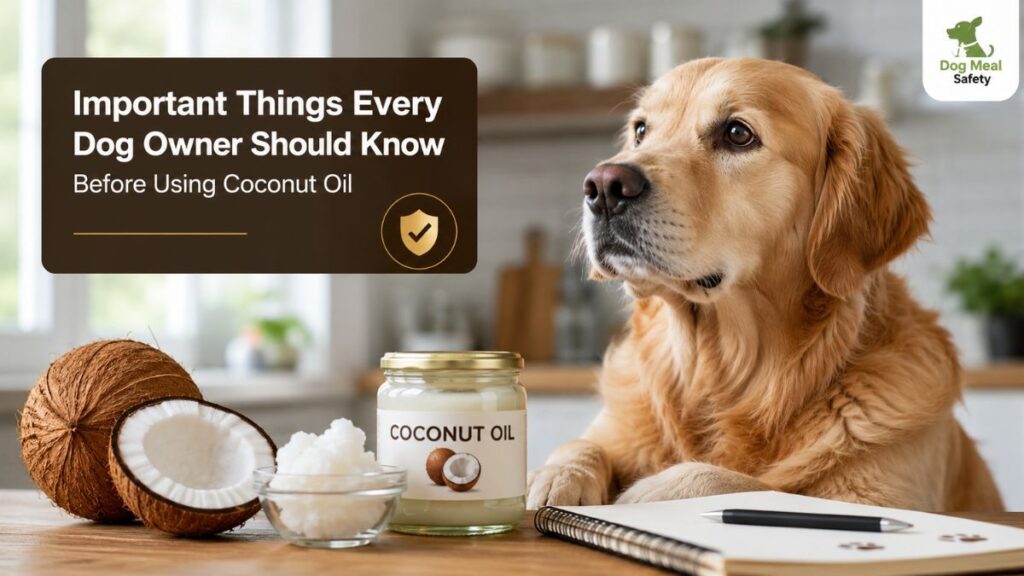
Before you start, here’s a final rundown of the most important points to keep in mind:
- Always start small and increase the amount gradually over one to two weeks.
- Watch closely for any digestive changes, especially during the first two weeks of use.
- Choose virgin or unrefined coconut oil over heavily processed, refined versions.
- Never use it as a substitute for prescribed medication, a vet-recommended diet, or professional treatment.
- Consult your vet first if your dog has pancreatitis, obesity, diabetes, or any chronic digestive disorder.
- Store it properly in a cool, dry place, away from direct sunlight and heat sources.
- Be consistent, not excessive — a small daily amount over time tends to work better than large occasional amounts.
- Track results honestly — if you don’t notice any real benefit after a month, it’s completely fine to stop using it.
Following these basic guidelines helps you enjoy the potential benefits of coconut oil while minimizing the risk of an upset stomach or unwanted weight gain.
Conclusion
Coconut oil can be a helpful addition to your dog’s routine when used correctly — supporting skin health, coat shine, fresher breath, and digestion in many dogs. However, it isn’t a cure-all, and its benefits are backed more by owner experience and small-scale observation than by strong, large-scale scientific research. The biggest risk isn’t the oil itself, but overuse, since too much can quickly lead to stomach upset, greasy stools, or unwanted weight gain over time. Start with a small amount, watch closely how your dog responds over the first two weeks, and choose a good-quality virgin or unrefined coconut oil rather than a heavily processed one. If your dog has health conditions like pancreatitis, obesity, or diabetes, talk to your vet before adding it to their diet. Used thoughtfully and in moderation, coconut oil can be a safe, natural supplement — but it should always support your dog’s health alongside proper veterinary care, never replace it.
FAQs
Can Dogs Eat Coconut Oil Every Day?
Yes, in small, vet-approved amounts, daily use is generally safe for most healthy dogs.
Does Coconut Oil Cure Dog Allergies?
No, it may help soothe mild skin dryness, but it does not treat allergies or infections.
Is Coconut Oil Safe for Puppies?
Small amounts are usually safe, but it’s best to consult your veterinarian before introducing it.
Can Coconut Oil Help With Dog Bad Breath?
Yes, its natural antimicrobial properties may help reduce odor-causing bacteria in the mouth.
Should Coconut Oil Replace a Dog’s Regular Dietary Fats?
No, coconut oil should only be used as a supplement and not as a replacement for essential dietary fats.
Can Coconut Oil Cause Diarrhea in Dogs?
Yes, giving too much too quickly can lead to digestive upset, including diarrhea.
Is Virgin Coconut Oil Better Than Refined Coconut Oil for Dogs?
Yes, virgin coconut oil typically contains more natural nutrients and undergoes less processing.