

Can dogs eat papaya? Yes. The ripe orange flesh is non-toxic and makes a good occasional treat once you peel it, scoop out every seed, and cut it into small pieces. The skin, seeds, leaves, green unripe fruit, and anything sweetened should stay out of the bowl. A safe starting amount for most dogs is about half a gram of papaya per pound of body weight, which is roughly one tablespoon of diced papaya for a 25-pound dog.
Papaya is not on the ASPCA list of foods toxic to dogs, and PetMD calls it a healthy treat in moderation. When a dog does get sick from papaya, the cause is usually a part of the fruit that should have been thrown away, or too much fruit at once.
Can dogs eat papaya safely? 5 essential rules
These five rules prevent most of the problems owners run into with papaya for dogs.
Feed only ripe flesh. The skin should be yellow or orange, never green.
Remove every seed and all of the peel before your dog gets near it.
Cut the fruit into cubes no bigger than your dog can swallow easily.
Start with half a gram per pound of body weight, and wait 24 hours before offering more.
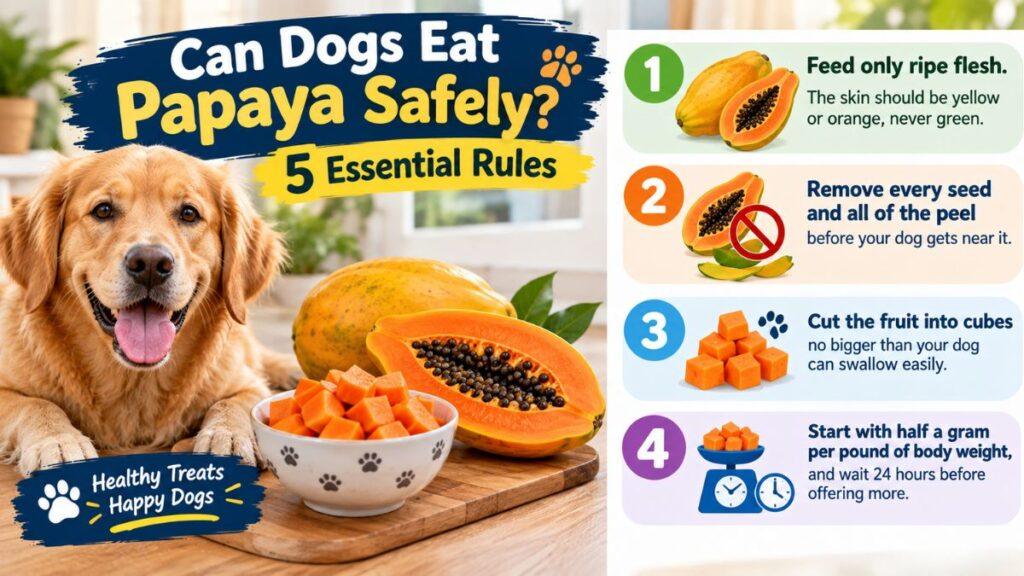
Skip dried, canned, or sweetened papaya products, and ask your vet first if your dog is diabetic, has pancreatitis, or eats a prescription diet.
Can dogs eat papaya seeds, skin, or leaves?
Only the ripe flesh is safe to share. Here is how every part of the fruit compares.
| Part or form | Is papaya safe for dogs in this form? | Why |
| Ripe flesh | Yes, in small amounts | Soft, low in calories, easy to chew |
| Seeds | No | Choking and blockage risk, plus trace cyanogenic compounds |
| Skin or peel | No | Tough and waxy, can cause vomiting or a blockage |
| Green, unripe papaya | No | More latex and papain, which can irritate the mouth and stomach |
| Leaves, leaf tea, leaf extract | No, unless your vet advises it | Concentrated plant compounds sold as human supplements |
| Frozen plain papaya | Yes | Same nutrition as fresh, good in hot weather |
| Dried papaya | Rarely, in tiny pieces | Sugar is concentrated, and many brands add more |
| Canned papaya in syrup | No | Added sugar, and sweetened products need a xylitol check |
The seeds cause the most confusion. They contain cyanogenic compounds, but PetPlace notes the amount is small enough to be insignificant. The practical danger is physical: a mouthful of slippery seeds can lodge in a small dog’s throat or collect in the gut.
There is one more reason to keep seeds away from breeding males. In a 2011 study in Animal Reproduction Science, dogs given daily papaya seed extract had significantly lower sperm concentration and motility from around day 60. That was a concentrated extract, not a stray seed, but it is a good reason not to use papaya seed powder as a dog supplement.
Papaya nutrition facts for dogs
These values come from USDA FoodData Central for 100 grams of raw papaya.
| Nutrient | Amount per 100 g |
| Calories | 43 kcal |
| Water | about 88 g |
| Carbohydrates | 10.8 g |
| Natural sugars | 7.8 g |
| Fiber | 1.7 g |
| Protein | 0.5 g |
| Fat | 0.3 g |
| Vitamin C | about 61 mg |
| Vitamin A (RAE) | 47 mcg |
Papaya is mostly water, so a tablespoon of diced fruit (about 9 grams) carries only around 4 calories. It also has slightly more vitamin C than an orange, gram for gram. That sounds impressive until you remember that healthy dogs make their own vitamin C, and a complete dog food already covers vitamin A. Papaya for dogs is a light, juicy snack, not a supplement your dog needs.
Is papaya high in sugar compared with other fruits?
Papaya sits in the middle of the fruit range. Some guides call it high in sugar and others call it low, and both are partly right. Here are USDA figures for common dog-safe fruits.
| Fruit | Natural sugar per 100 g |
| Strawberries | 4.9 g |
| Watermelon | 6.2 g |
| Papaya | 7.8 g |
| Blueberries | 10.0 g |
| Apples | 10.4 g |
| Bananas | 12.2 g |
| Mango | 13.7 g |
Papaya has less sugar than bananas, mango, apples, and blueberries, but more than strawberries or watermelon. If you want a lower-sugar fruit, our guides on strawberries for dogs and watermelon for dogs cover both, and the blueberries for dogs guide shows how berries compare. For a healthy dog eating a tablespoon or two, papaya sugar is a non-issue. For a diabetic dog, any fruit is extra sugar, and that is a conversation for your vet.
Is papaya good for dogs? Real benefits vs myths
The honest benefits are modest. Papaya is a low-calorie, high-moisture treat most dogs like, which makes it a good swap for fatty processed snacks, particularly for dogs watching their weight. Its fiber can help a dog with mild constipation.

Papaya also contains papain, the protein-digesting enzyme used in meat tenderizer. Heat destroys it, so fresh papaya is the form that keeps it. Whether a few cubes meaningfully improve digestion in a healthy dog has not been tested in canine studies, so treat any “digestive aid” claim about papaya for dogs as a maybe.
Some articles say papaya prevents cancer, protects the heart, or treats arthritis in dogs. Those ideas come from human studies or lab research on compounds such as lycopene, not from trials in dogs. At least one pet brand even recommends papaya for dogs with pancreatitis, kidney disease, or diabetes. Do not follow that without your vet, because those dogs need the tightest diet control.
How much papaya can dogs eat by weight?
Treats should make up no more than 10 percent of a dog’s daily calories. With papaya, though, calories are rarely the limit. A 10-pound dog’s treat budget would allow roughly 80 grams of papaya, far more than a small stomach tolerates. Fiber and sugar cause loose stool long before calories matter.
A more practical starting point is the half-gram-per-pound guideline from Native Pet’s nutrition team. Daily calories below are estimates for a healthy neutered adult, using the veterinary resting energy formula (70 times body weight in kilograms to the 0.75 power) and a 1.6 maintenance factor.
| Dog weight | Estimated daily calories | 10% treat budget | Starting papaya portion | Roughly |
| 10 lb | about 350 kcal | 35 kcal | 5 g | 1 small cube |
| 25 lb | about 690 kcal | 69 kcal | 12 g | 1 tablespoon |
| 50 lb | about 1,160 kcal | 116 kcal | 25 g | 3 tablespoons |
| 75 lb | about 1,580 kcal | 158 kcal | 38 g | 4 tablespoons |
| 100 lb | about 1,960 kcal | 196 kcal | 50 g | 1/3 cup |
The starting portion uses a small slice of each treat budget, leaving room for other snacks. Offer half this amount the first time and wait 24 hours. If stools stay normal, papaya two or three times a week is a sensible rhythm.
Papaya disagrees with some dogs, and the signs usually show up within a day. Soft stool, extra gas, or a single episode of vomiting after the first taste means that portion was too big or papaya simply does not suit your dog. Stop the fruit and let the stomach settle. Scratching, licking the paws, or red ears over the following days can point to a food sensitivity, which is worth mentioning to your vet before you try again.
How to prepare papaya for your dog
Preparing papaya for dogs takes about two minutes and removes nearly all of the risk.
Pick a ripe papaya. The skin should be mostly yellow or orange and give slightly when you press it with your thumb.
Wash the outside, since your knife drags anything on the skin into the flesh.
Cut it in half lengthwise and scoop out every seed along with the stringy gel around them.
Peel away all of the skin, including any green patches near the stem.
Cut the flesh into cubes about half an inch wide for small dogs and about an inch wide for large dogs.
Set your dog’s portion aside before adding lime, chili, salt, or sugar to your own bowl. Plain cubes make good soft training rewards. On hot days, freeze a few cubes and let them thaw for a minute so small dogs are not biting rock-hard pieces. You can also mash papaya into regular food as a topper, or freeze it inside a rubber chew toy with plain unsweetened yogurt if your dog handles dairy.
Can dogs eat papaya dried, frozen, canned, or green?
Fresh ripe papaya is the best option, and plain frozen papaya is just as good. Check frozen blends for added sugar.
Dried papaya is where many owners slip up. Drying removes water, so one chewy strip can hold the sugar of several fresh cubes, and many products for people add sugar or sulfites. If you use it, pick a dog product with papaya as the only ingredient and break it into small bits.
Canned papaya usually sits in syrup, which rules it out. Petco warns that some canned papaya may contain xylitol, which is toxic to dogs. Read the label on any sweetened papaya product, including yogurts and fruit cups.
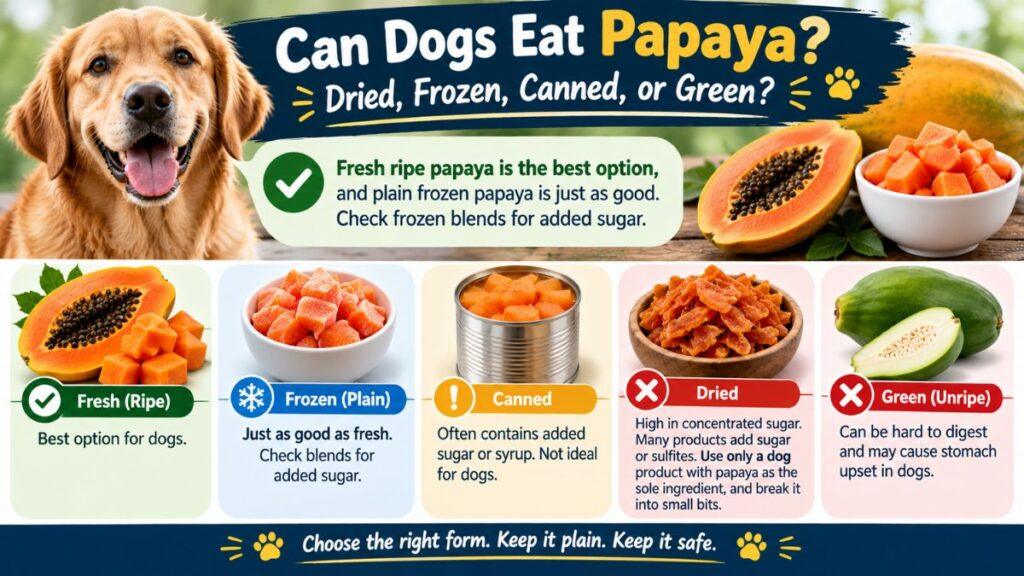
Green, unripe papaya is firm and full of latex, the milky sap that carries most of the plant’s papain. It can irritate a dog’s mouth and stomach, so skip green papaya salads entirely.
Can puppies and senior dogs eat papaya?
Puppies can have a very small piece of ripe papaya once they eat solid food. One pea-sized piece is plenty the first time, and fruit should stay a rare extra next to a balanced puppy diet.
Is papaya safe for dogs in their senior years? Usually, and it is soft enough for sore teeth. Older dogs are also more likely to have diabetes, kidney disease, or pancreatitis, so check with your vet if yours has an ongoing condition.
Dogs that should skip papaya
Is papaya safe for dogs with health problems? Not always. It suits most healthy dogs, but these dogs should skip it or only have it with a vet’s approval:
Diabetic dogs, because any fruit sugar can affect blood glucose control.
Dogs with pancreatitis or a history of stomach and bowel disease, which Petco notes may react badly to papaya.
Dogs on a prescription diet, since PetMD advises that these dogs should not get food outside the diet.
Dogs with food allergies or itchy skin, where every new food should be added one at a time.
Very small breeds and dogs that gulp, which need tiny, soft pieces to avoid choking.
What to do if your dog ate papaya seeds, skin, or a whole papaya
Work out what your dog ate, how much, and how big your dog is. Ripe flesh is not toxic, so the question is whether seeds or skin could cause a blockage.
If a medium or large dog swallowed a few seeds or a small strip of skin, the pieces will usually pass. Watch your dog closely for the next 24 to 48 hours and check that bowel movements continue as normal.
If a small dog ate a lot of seeds, ate a large piece of peel, or any dog ate half a papaya or more with the skin on, call your vet now, even before symptoms start. Do not try to make your dog vomit unless your vet tells you to. If the papaya was part of a sweetened product, check the label for xylitol and call your vet or the ASPCA Animal Poison Control Center at (888) 426-4435 (a consultation fee may apply).
Call your vet right away if you see any of these signs of a blockage after your dog eats papaya skin or seeds:
Repeated vomiting, or vomiting water soon after drinking
Refusing food or treats
A painful, tight, or swollen belly
Straining to poop without producing stool, or small amounts of watery diarrhea
Weakness, restlessness, or unusual tiredness
PetMD notes that a dog who is vomiting but not passing any stool is showing a strong sign of intestinal blockage, and that combination needs a vet the same day.
Papaya leaf, papaya enzymes, and papaya dog treats
When owners ask can dogs eat papaya leaf or enzyme products, the answer is different from the fruit. Papaya leaf tea, capsules, and extracts are made for people and are far more concentrated than the fruit, with no established safe dose for dogs. Skip them unless your vet recommends a specific product. Pet enzyme chews with papain are not dangerous for most healthy dogs, but they can mask ongoing gas or diarrhea that needs a diagnosis. Papaya listed inside a complete dog food is fine, and single-ingredient papaya chews count as treats.
Can dogs eat papaya? Frequently asked questions
Can dogs eat papaya every day?
Most healthy dogs can, in small portions, but two or three times a week is better for variety and stool consistency.
Can dogs eat papaya seeds?
No, because seeds are a choking and blockage risk, especially for small dogs.
Can dogs eat papaya skin?
No, the skin is too tough to digest and can cause vomiting or a blockage.
Can dogs eat papaya that is dried?
Only rarely and in tiny pieces, because drying concentrates the sugar.
Can puppies eat papaya?
Yes, but start with one pea-sized piece of ripe flesh.
Can dogs eat papaya if they are diabetic?
Only with your vet’s approval, since it adds natural sugar.
Is papaya good for dogs with an upset stomach?
Do not use papaya as a treatment for vomiting or diarrhea, and see your vet if symptoms last more than a day.
Does papaya help constipation in dogs?
The fiber and water may help mild cases, but call your vet if your dog has not pooped in two days.
Is papaya better for dogs than mango?
Papaya has less sugar per 100 grams than mango, but both are fine in small portions without the pit, seeds, or skin.
How much papaya can dogs eat at 20 pounds?
Start with about 10 grams, roughly one tablespoon of small cubes.
The bottom line on papaya for dogs
So, can dogs eat papaya? Yes, as long as you share only the ripe orange flesh. Peel it, remove every seed, cut it small, and start with about half a gram per pound of body weight. That is one small cube for a toy breed and a few tablespoons for a Labrador.
Papaya has less sugar than bananas or mango and makes a juicy swap for processed snacks, but it will not cure digestive disease or prevent cancer, whatever some product pages claim. Leave out the seeds, skin, leaves, green fruit, and anything canned or sweetened. Ask your vet first if your dog is diabetic, has pancreatitis, or eats a prescription diet
. If your dog gets into a whole papaya, watch for vomiting, belly pain, or straining without stool, and call your vet quickly if you see them. For more safe snack ideas, browse our fruits dogs can eat guide.
2 thoughts on “Can dogs eat papaya? 5 essential safety rules”