
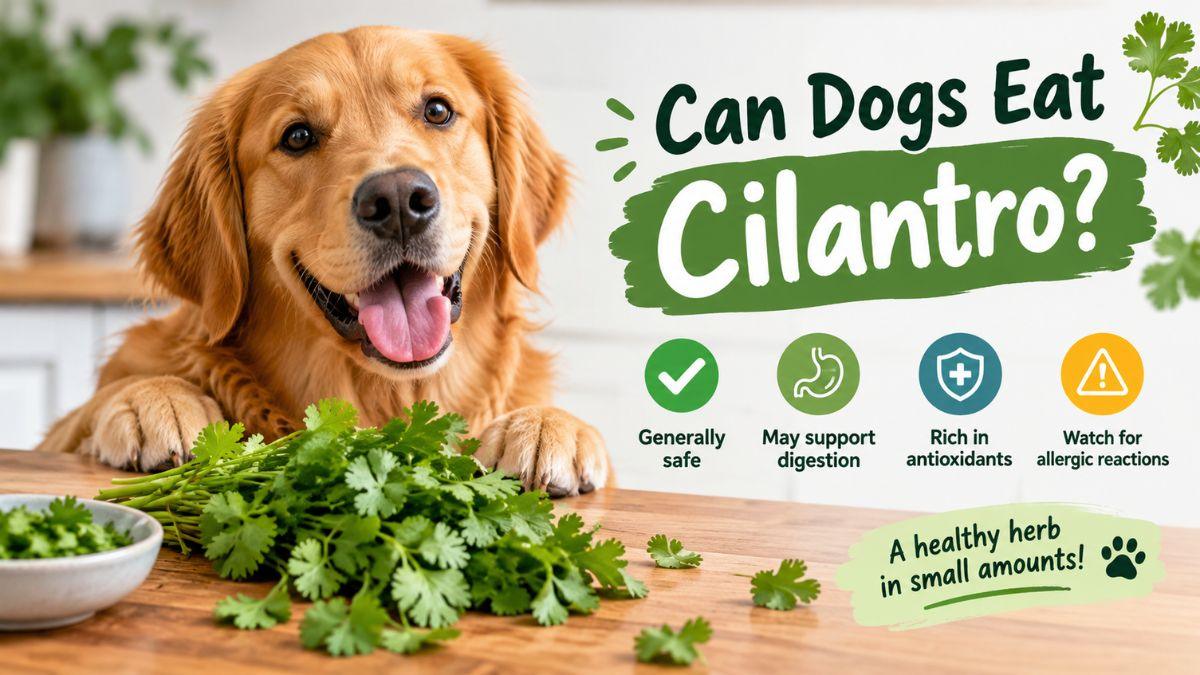
Can dogs eat cilantro? Yes, in small amounts. Plain, fresh cilantro is not toxic to dogs, and a little chopped over their food is safe for most healthy adult dogs. The ASPCA lists Coriandrum sativum (also called coriander, Chinese parsley, or dhania) as non-toxic to dogs, cats, and horses.
The trouble starts with the foods cilantro usually comes in: salsa, guacamole, taco meat, and seasoned rice. Those dishes often carry onion, garlic, salt, and fat, and onion and garlic can damage a dog’s red blood cells.
Is cilantro safe for dogs, or toxic?
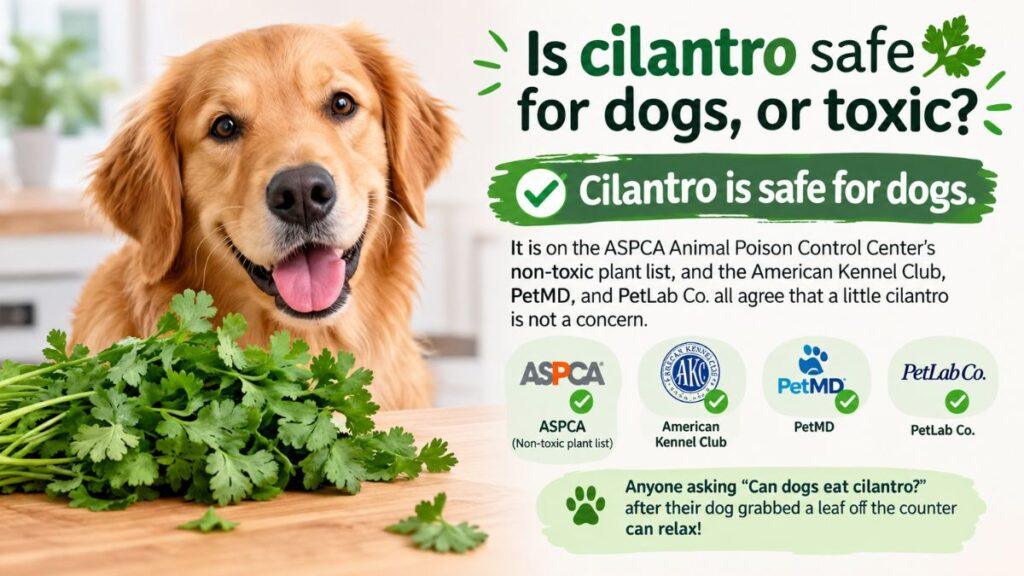
Cilantro is safe for dogs. It is on the ASPCA Animal Poison Control Center’s non-toxic plant list, and the American Kennel Club, PetMD, and PetLab Co. all agree that a little cilantro is not a concern. Anyone asking can dogs eat cilantro after their dog grabbed a leaf off the counter can relax.
“Non-toxic” does not mean “eat as much as you want.” The ASPCA notes that eating any plant material can cause vomiting or stomach upset in dogs. A dog that eats a big handful of cilantro can get loose stools simply because its gut is not used to that much leafy fiber.
A few plants get confused with cilantro, and the difference matters. Parsley (Petroselinum crispum) looks similar and sits in the same plant family, but the ASPCA lists parsley as toxic to dogs because it contains furanocoumarins, which can make skin more sensitive to sunlight when eaten in large amounts. Culantro and Vietnamese coriander are separate plants with much less pet safety data. If you are not sure which herb you are holding, crush a leaf and smell it. Cilantro has a sharp, citrusy, slightly soapy smell that flat-leaf parsley does not.
How much cilantro can dogs have?
No veterinary body has published an official cilantro dose for dogs. The general rule vets use is that treats and extras should stay under 10% of a dog’s daily calories, and PetMD suggests a few sprinkles per meal is enough for a small dog.
Calories are not the limit here. One tablespoon of chopped cilantro weighs about a gram and has well under 1 calorie, so you would never hit the 10% line. Your dog’s stomach is the limit. Too much fresh herb at once is what causes gas, vomiting, or soft stool.
These starting amounts of finely chopped fresh leaves keep things on the safe side:
| Dog size | Example breeds | Starting amount per meal |
| Under 10 lb | Chihuahua, Yorkie | 1 or 2 leaves, about 1/4 teaspoon |
| 10 to 25 lb | Beagle, French Bulldog | Up to 1/2 teaspoon |
| 25 to 50 lb | Border Collie, Bulldog | Up to 1 teaspoon |
| 50 to 90 lb | Labrador, German Shepherd | Up to 2 teaspoons |
| Over 90 lb | Great Dane, Mastiff | Up to 1 tablespoon |
Start at half the amount the first time, then wait 24 hours. If your dog’s stools stay normal and there is no vomiting or itching, you can give the full amount a few times a week.
Can dogs eat cilantro stems, seeds, and dried leaves?
Fresh leaves are the best choice. They are soft, easy to chop, and easy to digest.
Stems are where advice splits. Dr. Jerry Klein, Chief Veterinarian for the American Kennel Club, recommends avoiding stems because they are harder to digest, while PetLab Co. suggests chopping leaves and stems together. Thick, stringy stems are more likely to upset a sensitive stomach, but thin upper stems minced very finely are usually fine. If your dog has a touchy gut, stick to leaves.
Coriander seeds and coriander powder come from the same plant and are also non-toxic. PetLab’s veterinary advisor, Dr. Rhiannon Koehler, suggests grinding seeds into powder rather than feeding them whole, since whole seeds are harder to digest. Plain ground coriander from a single-ingredient jar is fine in a tiny pinch.
Dried cilantro is safe. Use even less than fresh, because a pinch of dried leaves equals a much larger pile of fresh ones.
Roots are not toxic, but they are fibrous and often carry soil.
Cilantro essential oil is a different product from the leaf, and concentrated oils do not belong in a dog’s food or water. Fetch’s staff veterinarian, Dr. Aliya McCullough, advises against adding cilantro to a dog’s water bowl unless your vet recommends it, and notes the smell may even put a dog off drinking.
Are there real benefits of cilantro for dogs?
Some, but they are smaller than most articles claim.
According to USDA data, 100 grams of raw cilantro has 23 calories, 310 micrograms of vitamin K, 337 micrograms of vitamin A, 27 milligrams of vitamin C, and 2.8 grams of fiber. That sounds like a lot until you scale it down. A dog eating a teaspoon of chopped leaves gets a fraction of a gram, which means a few micrograms of vitamin K and almost nothing else.
That is why Dr. Koehler says cilantro is unlikely to make a significant difference for a dog already eating a complete and balanced diet. Commercial dog foods labeled “complete and balanced” are formulated to cover a dog’s vitamin and mineral needs on their own.
What cilantro can do is small but real. Dr. Koehler points out that a new smell or taste on a familiar meal gives some dogs a bit of mental stimulation. The AKC notes cilantro may improve how a dog’s breath smells, though it does not replace brushing or dental cleanings, and bad breath that keeps coming back is often a sign of dental disease worth a vet visit. For a dog on a weight plan, a sprinkle of herb also adds interest to a meal without adding calories.
Claims that cilantro detoxes dogs, removes heavy metals, or treats digestive problems do not have canine research behind them. If your dog has an ongoing stomach issue, talk to your vet instead of treating it with herbs.
Will your dog even like cilantro?
Many will not. Dr. Klein at the AKC says most dogs do not care for the taste. In people, genetics partly decides whether cilantro tastes fresh or soapy. Nobody knows if something similar happens in dogs, but plenty of dogs sniff it and walk away.
Dr. Koehler’s tip is to put it on something your dog already loves, such as a spoon of plain boiled chicken, rather than offering a leaf on its own. If your dog refuses it, do not push. There is nothing in cilantro your dog needs.
When cilantro becomes a problem
These are the situations where you should skip cilantro or call your vet.
Cilantro mixed into human food. When the question is can dogs eat cilantro in salsa, the answer is no, because of what else is in the bowl. Salsa, pico de gallo, guacamole, chimichurri, green chutney, and taco meat often contain onion, garlic, or both. According to the Merck Veterinary Manual, garlic is 3 to 5 times more toxic than onion, and both are harmful whether raw, cooked, dried, or powdered. If you use salsa at home, our guide on whether dogs can eat tomatoes covers the tomato side of the bowl.
Cilantro lime rice. Copycat recipes based on Chipotle’s version use rice, water, bay leaf, oil, cilantro, lemon and lime juice, and salt, with no onion or garlic. Many homemade versions add garlic, though. A spoonful of plain restaurant-style rice is more likely to cause a mild upset from salt and oil than poisoning, while a homemade batch with garlic is a different story. When you do not know the recipe, do not share it. The lime and oil are covered in our pages on oranges and other citrus for dogs and olive oil for dogs.
Taco seasoning and spice blends. Store-bought taco and fajita seasoning usually lists onion powder and garlic powder. A dog that licks a spilled packet is at more risk than one that eats a sprig of cilantro.
Dogs that should skip it. Leave cilantro out for puppies still settling into their food, dogs on prescription or elimination diets, dogs with chronic stomach trouble, and any dog currently vomiting or having diarrhea.
Allergic reactions. Cilantro allergies in dogs appear to be uncommon, but Dr. Koehler notes nobody knows the true rate because dogs rarely eat it. Watch for hives, facial swelling, itching, vomiting or diarrhea, and trouble breathing. Trouble breathing or a swollen face needs a vet right away.
My dog ate salsa, guacamole, or tacos with cilantro: what to do
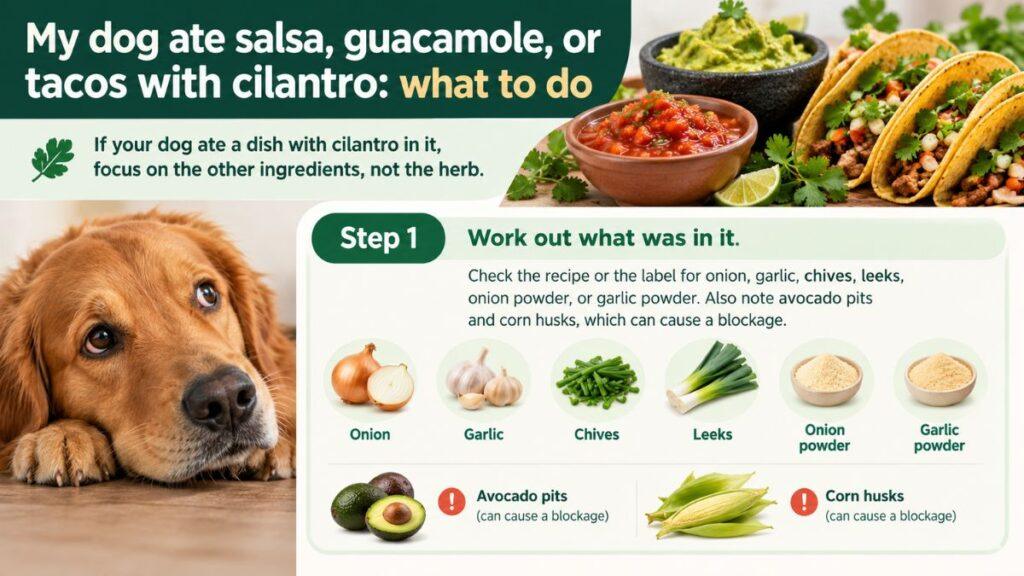
If your dog ate a dish with cilantro in it, focus on the other ingredients, not the herb.
Step 1: Work out what was in it. Check the recipe or the label for onion, garlic, chives, leeks, onion powder, or garlic powder. Also note avocado pits and corn husks, which can cause a blockage.
Step 2: Estimate how much your dog ate and weigh your dog. Onion toxicity depends on dose. The Merck Veterinary Manual reports clinical signs in dogs after 15 to 30 grams of raw onion per kilogram of body weight. Many vets use a more cautious line of about 0.5% of body weight in onion as the point to call.
Using that cautious line:
- A 5 lb (2.3 kg) Chihuahua: about 11 grams of onion, roughly 1 tablespoon chopped.
- A 20 lb (9 kg) Beagle: about 45 grams of onion.
- A 60 lb (27 kg) Labrador: about 136 grams of onion, more than a medium onion.
So a Lab that licks a few chips of pico off the floor is in a very different spot from a Chihuahua that finishes a small bowl of it. Garlic lowers those numbers a lot, and powders are more concentrated than fresh vegetables.
Step 3: Call for advice if you are unsure. Contact your vet or the ASPCA Animal Poison Control Center at (888) 426-4435, which is open 24 hours a day (a consultation fee may apply). Do not make your dog vomit at home unless a vet tells you to.
Step 4: Watch for delayed signs. Onion and garlic damage often does not show right away. The Merck Veterinary Manual describes signs of anemia appearing several days after eating, including weakness, pale gums, yellowing of the gums or eyes, and collapse. Dark or reddish urine and fast breathing are also warning signs. Early on, you might only see drooling, vomiting, or diarrhea.
My dog ate the cilantro plant from the garden
This is usually low stress. Dr. McCullough at Fetch says a dog that eats a small amount of dropped cilantro is unlikely to get sick.
If your dog tore up a whole pot or garden row, expect possible gas, vomiting, or soft stool for a day. Offer water, skip extras at the next meal, and watch for symptoms that last more than 24 hours.
What was on the plant matters more than the plant. Fertilizers, slug bait, and pesticides are far more dangerous than cilantro. If any were used, find the product label and call your vet or poison control with it in hand.
How to serve cilantro to your dog safely
Rinse fresh cilantro well under running water to remove dirt and residue.
Pull off the leaves and discard thick stems.
Chop the leaves very finely.
Sprinkle the amount from the size table over your dog’s regular food, or mix it into something plain.
The easiest option is mixing chopped leaves into plain boiled, unseasoned chicken. For a slower treat, stir a pinch of chopped cilantro into plain canned pumpkin (not pumpkin pie filling), spread it on a lick mat, and freeze it for an hour. On hot days, blend a few leaves with water, pour the mix into a silicone ice tray, and give your dog one frozen cube. For another cooling snack, see our guide to watermelon for dogs.
Keep everything plain, with no salt, butter, oil, lime, garlic, or onion added.
Cilantro vs other herbs for dogs
Basil and rosemary are also listed as non-toxic by the ASPCA. Chives, garlic, and leeks belong to the onion family and should never be fed. When you try a new herb, check the plant’s scientific name on the ASPCA list first, since common names vary by country. What Americans call cilantro, much of the world calls coriander.
Frequently asked questions
Can dogs eat cilantro every day?
A small sprinkle is not harmful, but a few times a week is a better habit because it keeps stomach upset less likely.
Can puppies eat cilantro?
It is not toxic, but wait until your puppy is settled on its food and ask your vet before adding extras.
Can dogs have coriander?
Yes, coriander is the same plant, and plain leaves, seeds, and ground coriander are non-toxic in small amounts.
Can dogs eat cilantro stems?
Thin, finely chopped stems are usually fine, but thick stems are harder to digest, so leaves are the safer choice.
Can dogs eat cilantro if they have a sensitive stomach?
Ask your vet first, and if they agree, start with a single leaf.
Can dogs eat cilantro lime rice?
Skip it unless you know it has no garlic or onion, and even then salt and oil can upset their stomach.
Can dogs eat salsa or pico de gallo?
No, because they usually contain onion and often garlic, which are toxic to dogs.
Can cilantro help my dog’s bad breath?
It may mask odor briefly, but persistent bad breath often means dental disease and needs a vet check.
Can dogs be allergic to cilantro?
Yes, though it seems rare, so watch for itching, hives, swelling, or stomach upset after the first taste.
Is cilantro safe for cats too?
Yes, the ASPCA lists cilantro as non-toxic to cats as well.
The bottom line on cilantro for dogs
Dogs can eat cilantro, and the ASPCA confirms the plant is non-toxic. A small, finely chopped amount of plain fresh leaves is safe for most healthy adult dogs, starting from about 1/4 teaspoon for toy breeds up to a tablespoon for giant breeds.
Do not expect cilantro to boost your dog’s health in any big way. The amounts dogs eat are too small, and a complete diet already covers their needs. Its value is mostly a bit of variety at mealtime for dogs that like the taste, and many do not.
The risk sits in the food around the herb. Salsa, guacamole, taco seasoning, and homemade cilantro rice can contain onion or garlic, and those can cause anemia that shows up days later. If your dog eats one of those, check the ingredients, weigh the amount against your dog’s size, and call your vet or the ASPCA Animal Poison Control Center at (888) 426-4435 if you are unsure.
Sources
ASPCA Animal Poison Control Center, Toxic and Non-Toxic Plants: Cilantro and Parsley
Merck Veterinary Manual, Garlic and Onion (Allium spp) Toxicosis in Animals (reviewed September 2024)
American Kennel Club, Can Dogs Eat Cilantro? (Dr. Jerry Klein)
PetLab Co., Can Dogs Eat Cilantro? (Dr. Rhiannon Koehler)
Fetch Pet Insurance, The Dig: Can Dogs Eat Cilantro? (Dr. Aliya McCullough)