

Can dogs eat pork? Yes, most healthy dogs can eat plain, fully cooked, boneless pork in small amounts. The pork has to be cooked to a safe temperature, trimmed of fat, and served with no seasoning, sauce, onion, or garlic. Raw pork, pork bones, bacon, ham, sausage, and pork rinds are the versions that cause trouble.
The details matter more with pork than with most meats. A plain slice of roast loin and a greasy strip of bacon come from the same animal but affect a dog’s stomach very differently. Below you will find which pork is safe, portions by body weight, cooking steps, the facts on raw pork, and what to do if your dog already ate the wrong kind.
Can dogs eat pork safely? The quick answer
Dogs can eat pork safely when it is lean, plain, fully cooked, and cut off the bone. Cook whole cuts to 145°F with a 3 minute rest and ground pork to 160°F. Keep pork as a treat, no more than 10% of your dog’s daily calories. Skip raw pork, bones, cured meats, and anything seasoned.
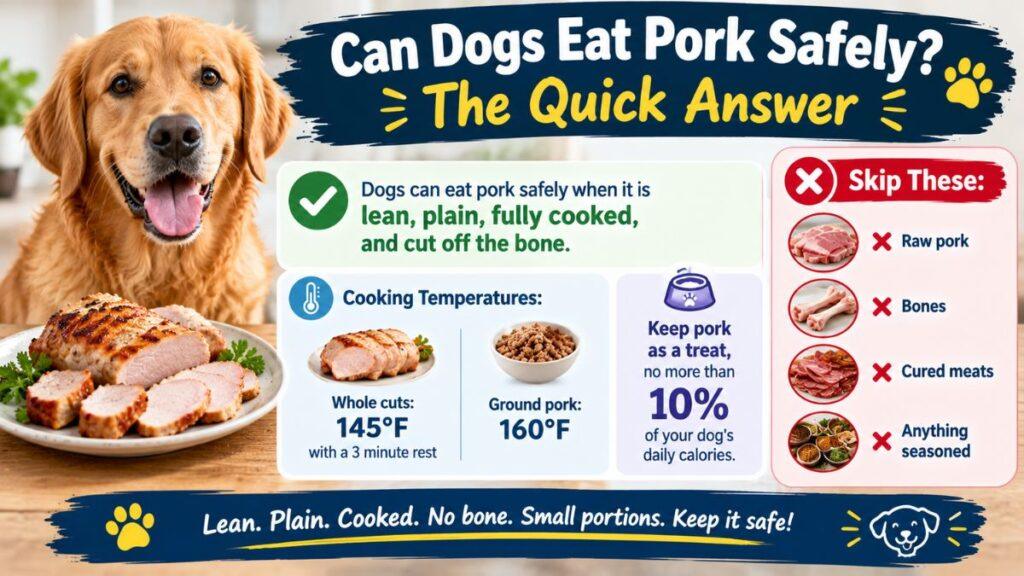
Pork is not toxic to dogs, and many commercial dog foods use it. The risks come from fat, salt, spice rubs, bones, and undercooked meat.
Which types of pork are safe for dogs
When owners ask if dogs can eat pork, they usually mean a specific food: the chop on their plate or the ham that fell on the floor. Here is how each common type stacks up.
| Type of pork | Safe for dogs? | Why |
| Plain cooked pork loin or tenderloin | Yes, in small amounts | Lean, easy to digest, no additives |
| Plain cooked pork chop meat (bone removed) | Yes, in small amounts | Trim the fat edge first |
| Plain cooked ground pork | Yes, occasionally | Higher in fat than loin, drain the grease |
| Raw or undercooked pork | No | Parasites and bacteria |
| Pork bones (cooked or raw) | No | Splinters, choking, blockages |
| Bacon | No | Very high in fat and salt |
| Ham | No | Cured, salty, often glazed with sugar |
| Pork sausage | No | Fat, salt, and often garlic or onion |
| Pork rinds and crackling | No | Fried skin, heavy salt and fat |
| Pulled pork or BBQ ribs | No | Sauces and rubs often contain onion and garlic |
| Pork fat trimmings | No | Common trigger for pancreatitis |
| Pork in commercial dog food | Yes | Cooked and balanced for dogs |
The closer the pork is to a plain piece of lean meat, the safer it is.
Is pork good for dogs?
Pork can be a good occasional protein for dogs. Lean cooked pork gives your dog complete protein with all the amino acids muscles need. It is also one of the richest meat sources of thiamine (vitamin B1), and it supplies zinc, selenium, phosphorus, and niacin.
Pork also has a practical use. Because it shows up in fewer dog foods than chicken or beef, some vets use it as a “novel protein” for dogs with suspected food allergies. A novel protein is simply one the dog has not eaten before, which makes it useful during an elimination diet.
That said, your dog does not need pork, since a complete dog food already covers these nutrients. And like any protein, pork can cause an allergic reaction in a small number of dogs, so the first serving should be tiny.
How much pork can a dog eat?
Knowing that dogs can eat pork is only half the question, because the amount decides whether it stays a safe treat. Most vets follow the 10% rule: treats and extras should make up no more than 10% of your dog’s daily calories. The table below turns that rule into real portions of lean cooked pork loin, which has roughly 1.4 calories per gram.
| Dog’s weight | Daily treat calories (about) | Maximum lean cooked pork per day |
| 10 lb | 35 calories | about 0.8 oz (24 g) |
| 20 lb | 60 calories | about 1.4 oz (40 g) |
| 30 lb | 80 calories | about 2 oz (55 g) |
| 50 lb | 115 calories | about 2.8 oz (80 g) |
| 70 lb | 150 calories | about 3.7 oz (105 g) |
| 90 lb | 180 calories | about 4.4 oz (125 g) |
These numbers are estimates for a healthy adult, spayed or neutered dog with an average activity level. They are also ceilings. If your dog gets other treats that day, the pork portion shrinks. Puppies, seniors, working dogs, and overweight dogs all have different needs, so ask your vet for your dog’s exact calorie target.
For a first try, give about a quarter of the amount in the table. Wait 24 hours and watch for loose stool, vomiting, or itching. If everything looks normal, you can offer pork again another day. Once or twice a week is plenty.
How to cook pork for your dog
Cooking pork for a dog is easier than cooking it for people, because you leave out almost everything that makes it taste good to us.
Start with a lean cut. Pork tenderloin and boneless loin chops work best. Trim away every visible piece of fat before cooking, since fat is the part most likely to upset your dog’s stomach.
Cook it plain. Boil, bake, or pan cook the pork with no oil, butter, salt, garlic, onion powder, or spice blend. Many “plain” store rubs and marinades hide onion or garlic powder, so do not share pork that was cooked for the family dinner.
Use a meat thermometer. The USDA safe temperature chart lists 145°F with a 3 minute rest for pork chops and roasts, and 160°F for ground meat. Hitting those numbers kills parasites and harmful bacteria.
Remove the bone, then cut the meat into small pieces. Bite size cubes suit small dogs, and larger dogs still do better with pieces they cannot gulp whole. Let the pork cool completely before serving.
Refrigerate leftovers and use them within three to four days, or mix a few cubes into your dog’s food as a topper.
Can dogs eat raw pork?
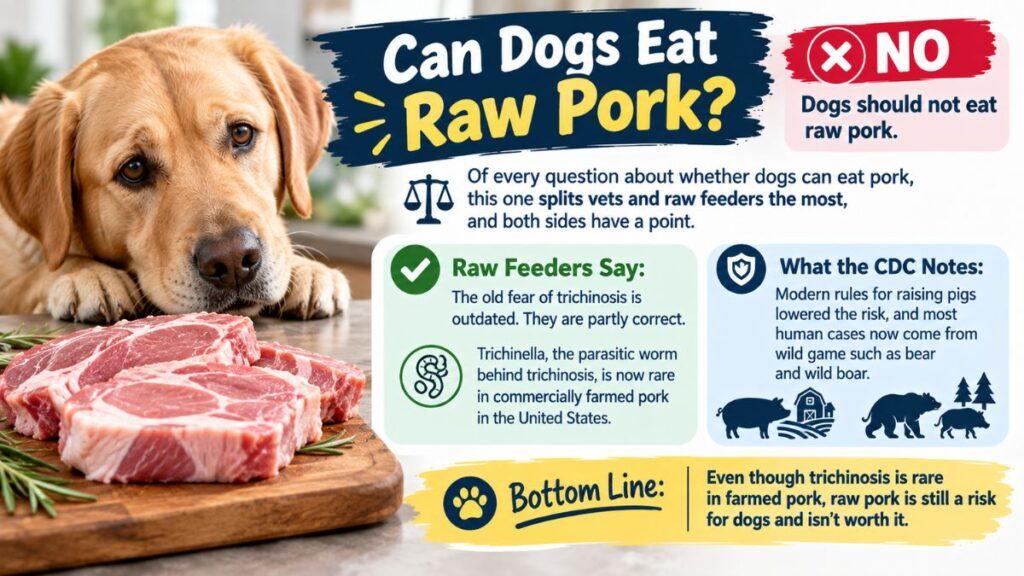
No, dogs should not eat raw pork. Of every question about whether dogs can eat pork, this one splits vets and raw feeders the most, and both sides have a point.
Raw feeders often say the old fear of trichinosis is outdated. They are partly correct. Trichinella, the parasitic worm behind trichinosis, is now rare in commercially farmed pork in the United States. The CDC notes that modern rules for raising pigs lowered the risk, and most human cases now come from wild game such as bear and wild boar.
Some raw feeders also freeze pork first. The CDC’s guidance says freezing pork less than 6 inches thick at 5°F for 20 days kills Trichinella. The same guidance warns that freezing does not reliably work on wild game meat, because some worm species found in wild animals survive the cold.
Parasites are only part of the problem. Raw pork can carry Salmonella and Listeria, and a dog that looks healthy can still shed those bacteria in its saliva and poop, putting children and older adults at risk.
The most serious danger is one almost no pet article mentions: pseudorabies, also called Aujeszky’s disease. This virus has been eradicated from U.S. commercial pig farms since 2004, but the Merck Veterinary Manual reports it is still endemic in feral pigs. In dogs it causes intense itching, drooling, and neurological signs, and it is almost always fatal. There is no treatment and no vaccine for dogs. A published case report describes hunting dogs in Arkansas that got infected after eating feral hog offal.
So the honest verdict looks like this. Raw store bought pork is lower risk than it was 50 years ago, but it is not risk free. Raw wild boar or feral hog meat is never safe for dogs, frozen or not. If you want to feed pork, cooking it removes almost all of these risks in about 20 minutes.
Can dogs eat bacon, ham, sausage, or pork rinds?
Dogs should not eat bacon, ham, sausage, or pork rinds. None of them are poisonous in a single bite, but all of them carry too much fat, salt, or seasoning to be a safe treat.
Bacon is mostly fat and salt. A high fat meal is one of the most common triggers for pancreatitis in dogs, a painful swelling of the pancreas that can need hospital care. Bacon grease poured over kibble is even worse.
Ham is cured with salt and often glazed with sugar or spices. Holiday ham scraps are a classic cause of vomiting and diarrhea.
Sausage usually combines fatty ground pork with salt, garlic, onion, and pepper. Garlic and onion belong to the allium family, which can damage a dog’s red blood cells. Signs of that damage may not show up for several days.
Pork rinds and pork crackling are fried pig skin covered in salt. They offer nothing a dog needs and add a lot of fat.
So can dogs eat pork products like these by accident without harm? If your dog steals one strip of bacon or a slice of ham, it will most likely be fine. The trouble starts with larger amounts, repeated snacks, or dogs that already have a sensitive stomach.
Can dogs eat pork chops and pork ribs?
Dogs can eat pork chop and rib meat if it is plain, cooked, and fully removed from the bone. The bone itself is the danger.
Cooked pork bones turn brittle and break into sharp pieces that can cut the mouth, get stuck in the throat, or block the intestines. Rib bones are small enough for many dogs to swallow whole. We cover this in detail in our guide to whether dogs can eat pork bones.
Also watch the seasoning. BBQ rubs and sauces often contain onion powder, garlic powder, salt, and sugar, so meat from a sauced rib is not plain pork.
Dogs that should not eat pork
Some dogs are better off skipping pork entirely, even the plain cooked kind. A dog that has had pancreatitis before is the biggest example, because even lean pork adds fat and a second attack can be worse than the first. Overweight dogs on a weight loss plan also have little room for extra calories.
Dogs on a prescription or veterinary diet should not get any food outside that diet unless the vet approves it, since one treat can undo weeks of careful feeding. The same goes for dogs with kidney or liver disease that need strict protein or fat limits. Dogs with chronic stomach or bowel problems and young puppies still settling into a new food are also safer without it for now.
For these dogs, the small benefit of a pork treat is not worth the risk of a flare up. Ask your vet before offering any.
My dog ate pork: what to do now
Can dogs eat pork by accident and be okay? Usually, yes. Stay calm and figure out what kind of pork your dog ate and how much. The right next step depends on that answer.
| What your dog ate | Risk level | What to do |
| A few bites of plain cooked pork | Low | Nothing special, watch for loose stool |
| Bacon, ham, or fatty scraps | Low to moderate | Watch for pancreatitis signs for 3 to 4 days |
| Pork with garlic or onion seasoning | Moderate | Call your vet, even if your dog seems fine |
| Raw store bought pork | Low to moderate | Watch for vomiting or diarrhea, clean up well |
| Raw wild boar or feral hog meat | High | Call your vet right away |
| A pork bone or rib bone | Moderate to high | Call your vet, do not make your dog vomit |
Watch for pancreatitis signs after any fatty pork. These include repeated vomiting, a hunched back or “praying” pose, belly pain, refusing food, diarrhea, and low energy.
For bones, watch for gagging, drooling, straining to poop, blood in the stool, a swollen belly, or vomiting. Do not try to make your dog throw up a bone. Sharp pieces can do more damage coming back up. If your dog ate a rib bone, read our step by step guide on what to do if your dog ate a rib bone.
If your vet is closed and you are worried about seasoning or a large amount, you can call the ASPCA Animal Poison Control Center at (888) 426-4435 or the Pet Poison Helpline at (855) 764-7661. Both lines charge a consultation fee.
Pork in commercial dog food and treats
If you want pork in your dog’s diet without cooking it, commercial food is the easier route. Pork appears as a main protein in some dry, wet, and fresh dog foods, and in freeze dried pork treats.
These products are processed to handle parasite and bacteria risks, and complete foods are balanced for dogs. For an elimination diet, a single protein pork food chosen with your vet beats kitchen scraps, because nothing else is mixed in.
Read the label before you buy. Look for pork or pork meal listed first, check the fat percentage, and avoid treats with added salt, garlic, or onion.
Can dogs eat pork? Common questions
Can dogs eat cooked pork?
Yes, plain cooked pork with no seasoning, fat, or bones is safe in small amounts.
Can dogs eat pork every day?
It is better as an occasional treat once or twice a week, not a daily food.
Can puppies eat pork?
Puppies can try a tiny piece of plain cooked pork, but their growth diet should come first.
Can dogs eat pulled pork?
No, pulled pork is usually cooked with sauces, onion, garlic, and extra fat.
Can dogs eat pork liver?
Yes, if fully cooked and fed in very small amounts, since liver is rich in vitamin A.
Can dogs eat pink pork?
Whole cuts that reached 145°F and rested may look slightly pink and are safe.
Is pork bad for dogs with allergies?
Pork is often used as a novel protein, but a few dogs react to it too.
Final thoughts
So, can dogs eat pork? Yes, as long as you keep it plain, lean, fully cooked, and boneless. A few cubes of unseasoned pork tenderloin make a perfectly good treat for most healthy dogs, and pork can even help dogs with food allergies when a vet guides the diet.
The trouble comes from the versions people love most. Bacon, ham, sausage, pork rinds, sauced ribs, and seasoned leftovers bring fat, salt, garlic, and onion that a dog’s body does not handle well. Pork bones splinter. Raw pork carries bacteria, and raw feral hog meat can carry a virus that kills dogs.
If you remember three things, make them these. Cook pork to at least 145°F, keep it under 10% of your dog’s daily calories, and never share the bone. Start with a small taste and watch your dog for a day. If your dog has a health condition, ask your vet before the first bite.
1 thought on “Can Dogs Eat Pork? 7 Proven Safety Rules (Vet-Backed)”